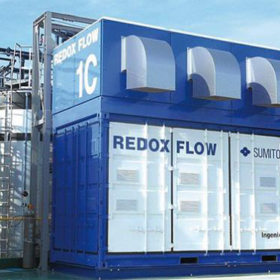
Malaysian green hydrogen project opts for Perth-based flow batteries
Australia-based TNG Limited has signed an agreement with Malaysian green hydrogen company AGV Energy which will see its vanadium redox flow batteries integrated into the HySustain project to store solar energy for green hydrogen production.

Solar energy collectors… grown from seeds!
Rice University engineers produced “near-perfect” 2D perovskite crystals for photovoltaic applications, grown from seeds.

The case for microinverters in Indian rooftop solar
Sunil Thamaran, India head for US company Enphase Energy, explains why microinverters are a good investment for rooftop solar. He also talks about the trends in microinverter design and the company’s plans in India.
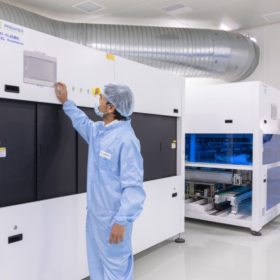
Premier Energies starts production at new Indian solar factory
The solar manufacturer has started trial production of high-efficiency solar cells at its new site in the southern state of Telangana. The fab can produce 19.2%-efficient multi-crystalline cells using MCCE textured black silicon, as well as making 22.5%-efficient mono PERC products.
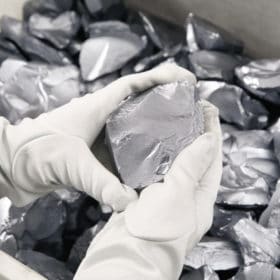
Jinko and JA Solar to invest $100m in 100,000-ton polysilicon fab
The two solar manufacturers will get priority access to polysilicon produced at the planned fab in Inner Mongolia, which developer Xinte Energy has said will be fully operational by June 2023.

Namibia’s capital city seeks proposals for 25 MW of PV
Through the tender, the administration of Windhoek wants to build several projects on a build, own, and operate basis.
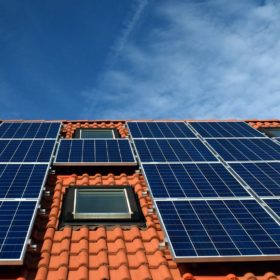
Italy has 189 MW/295 MWh of distributed storage capacity
The country added around 73.5 MW/109.2 MWh of new, small-sized storage capacity in 2020. Most of the batteries are in Lombardy and Veneto, where rebates are being offered.
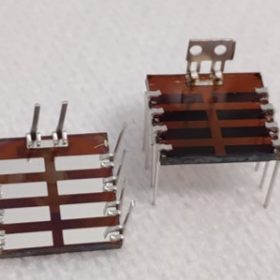
Black perovskite solar cell with 15% efficiency via thermal evaporation
The cell exhibited an open-circuit voltage of 1.1 V and was able to retain around 90% of its initial performance after 215 days of exposure to dim light at room temperature. According to its creators, this performance and the notable stability were ensured by the thermal evaporation technique used for depositing the perovskite layers onto the cell.
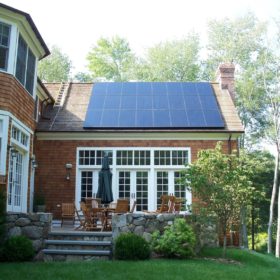
Solar 101: It all comes down to curb appeal
The residential solar industry has taken notice of the demand for beautiful, hidden panels, and is now providing creative and attractive designs that you can incorporate into your rooftop solar project.

Chinese PV Industry Brief: 50 GW wafer factory commissioned in Qinghai province
Furthermore, Zhonghuan Semiconductor has slightly reduced its wafer prices, while Longi has maintained them unchanged. Flat Glass is raising funds to support the construction of a new glass factory with a total annual capacity of 750,000 metric tons.
