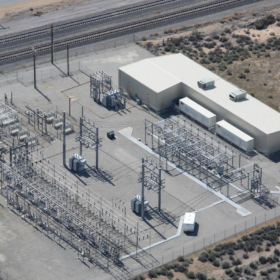
India launches 1 GW/2 GWh battery storage tender
Solar Energy Corp. of India (SECI) has started accepting proposals to set up 1 GW/2 GWh of standalone battery energy storage systems (BESS) connected to India’s interstate transmission system (ISTS). Bidding closes on Aug. 5.
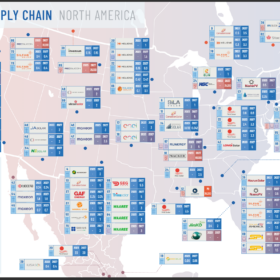
Sinovoltaics updates North American solar module manufacturing map
The latest North American manufacturing hub report from Sinovoltaics maps current and planned capacity for 95 plants in the region’s PV module supply chain. The report tracks announcements of current and future capacities at plants producing PV modules, cells, wafers, ingots, polysilicon, and metallurgical-grade silicon.
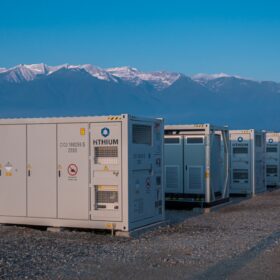
Bulgaria preps 3 GWh standalone energy storage tender
The Bulgarian Ministry of Energy is readying to launch a tender on September 2 and provide Capex support for the construction and commissioning of 3 GWh of standalone energy storage facilities. The public call is for projects equal to or greater than 10 MW with at least two hours of storage capacity, which will be primarily used in the frequency regulation markets.
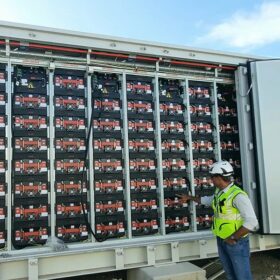
Sosteneo, Enel finalize partnership for 1.7 GW battery storage rollout in Italy
The Generali Group company has signed an agreement to acquire a minority share of Enel Libra Flexsys, which aims to roll out 1.7 GW of battery energy storage projects in Italy. “Revenues are fully contracted for 15 years through capacity agreements with Enel as well as capacity payments from Enel that are backed by Terna, Italy’s transmission system operator,” Sosteneo says.
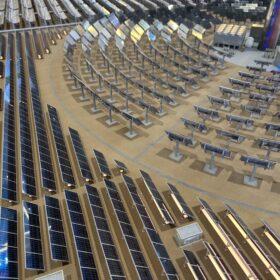
The many potentials of solar energy
In addition to producing renewable electricity, solar energy can also enable the clean production of hydrogen. Its potential in different applications is being assessed by several teams of researchers around the world. Adrian Pennington reports on some of this R and D and how IEC Standards can help in the third of the IEC columns for pv magazine
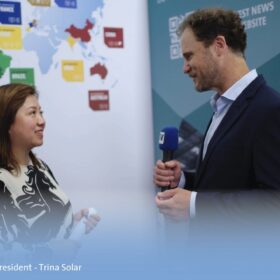
Trina expects consolidation, diversification of technology in challenging market conditions
At Intersolar Europe 2024, pv magazine spoke with Helena Li, executive president at Trina Solar, about fierce competition and consolidation in the PV industry. She believes the strongest manufacturers will become stronger in the months to come and says only product diversification and innovation can help companies move ahead in the current overcapacity scenario.
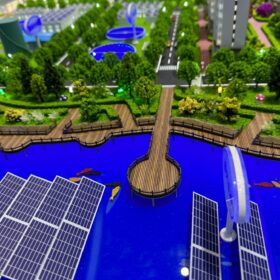
IEA-PVPS releases fact sheet on environmental life cycle assessment of PV Systems
The updated IEA PVPS Task 12 Fact Sheet provides a comprehensive assessment of the environmental impacts associated with PV systems. It highlights the significant advancements made in PV technology, emphasizing improved efficiencies and reduced environmental footprints.
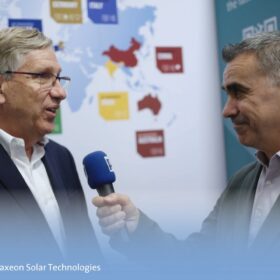
‘Nobody is making money right now’
As part of our Intersolar 2024 interview series, pv magazine spoke with Bill Mulligan, CEO of Singapore-based IBC solar module maker Maxeon. He states the IBC technology will remain competitive despite overcapacity and dropping modules prices and says Maxeon may enforce intellectual property rights with all existing and new back contact competitors that are allegedly utilizing its technologies.
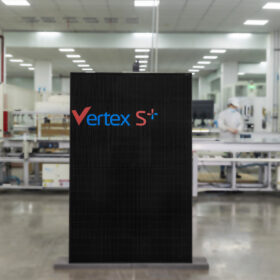
Trina Solar begins mass production of 430-455 W full-black modules
Trina Solar says it has launched mass production of 430 W to 455 W full-black PV modules. The Vertex S+ panels have efficiencies of up to 22.8% and weigh 21 kg, with a 1.6 mm x 1.6 mm dual-glass design.

Recursive least squares algorithms to detect abnormal operation in PV systems
Scientists in Spain have implemented recursive least squares (RLS) algorithms for anomaly detection in PV systems and have found they can provide “more realistic and meaningful assessment” than traditional energy analysis.
