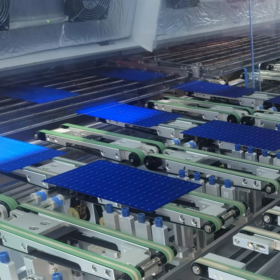
Chinese PV Industry Brief: Akcome sets up pilot factory for perovskite PV cells
Akcome says it hopes to soon start commercial production of its heterojunction (HJT) perovskite solar cells, but it has yet to provide a specific time frame.
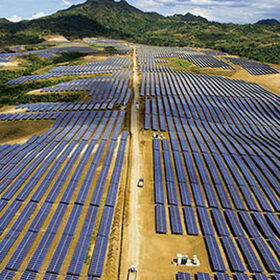
Solar Philippines begins working on 4 GW solar park
Solar Philippines says it has broken ground on what it touted to be the world’s largest solar array – a 4 GW solar park spread across 3,500 hectares of land in the northern part of the country.
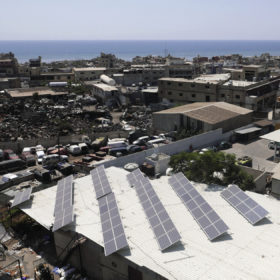
Lebanon introduces peer-to-peer renewable energy trading
The Lebanese parliament has ratified a new law that allows peer-to-peer renewable energy trading between private sector entities, in addition to enshrining net metering in the country’s legal system for the first time.

More than half of eligible schools enlist in new solar scheme in Ireland
Ireland’s Department of Education says that just over 900 schools out of 1,600 eligible facilities have signed up to participate in the government’s first round of the Solar for Schools Programme, a nationally funded scheme to cover the costs of 6 kW roof-mounted solar installations.
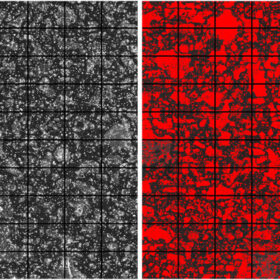
Researchers apply thresholding to PV soiling image analysis
Thresholding methods have commonly been used to characterize the soiling accumulated on glass coupons. Researchers led by the Sapienza University of Rome have identified 16 automatic thresholding methods that may be used for analyzing soiling on PV panels.
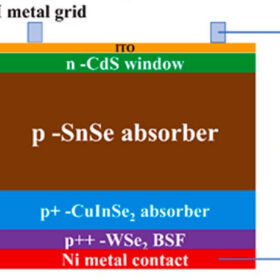
Novel tin selenide solar cell design promises 36.45% efficiency
Tin selenide solar cells have so far reached limited efficiencies in real applications. Bangladeshi scientists claim to have found a way to drastically improve their performance by adding a copper/indium/selenium (CIS) thin-film layer and a back surface field (BSF) layer.
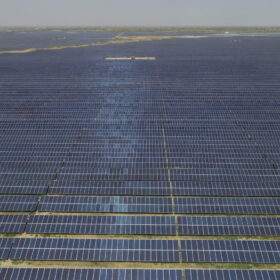
India’s SECI launches 1.5 GW solar tender
Solar Energy Corp. of India (SECI) has started accepting bids to develop 1.5 GW of solar projects on a build-own-operate basis. The projects can be located anywhere in India. Bidding closes on Jan. 31.
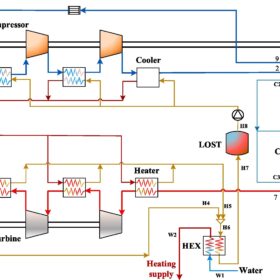
PV-driven liquid air storage system for buildings
An international research group has developed a PV-driven liquid air energy storage (LAES) system for building applications. Simulations suggest that it could meet 89.72% of power demand, 51.96% of heating demand, and 11% of cooling demand in a PV-powered building.
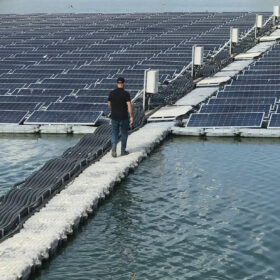
Topography-induced shading on floating PV
Researchers in Turkey have studied the impacts of topography-induced shading on floating PV at the Ayvalı hydroelectric power plant and have identified differences between the regions with the highest and lowest electricity production potential.
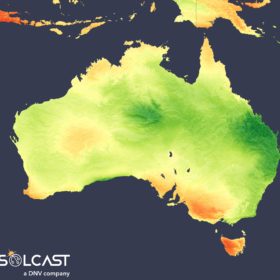
High pressure stalls El Nino’s expected solar boost in eastern Australia
In a new weekly update for pv magazine, Solcast, a DNV company, reports that eastern Australia’s behind-the-meter normalized generation has fallen by 10% to 15% year on year.
