AmpIn Energy to build 1.3 GW solar cell, module factory in India
AmpIn Energy Transition says it plans to invest $372 million to set up more than 600 MW of renewable energy projects and an integrated 1.3 GW solar cell and module factory in eastern India.

Australian startup begins work on agrivoltaic project with thermal storage
Graphite Energy, a thermal storage company, is building a facility in Australia to demonstrate how renewable energy and agriculture can co-exist through agrivoltaic and greenhouse systems.

Chinese PV Industry Brief: Polysilicon prices continue to slide
Polysilicon prices fell by as much as 3.23% in China this week, according to the China Nonferrous Metals Industry Association (CNMIA).
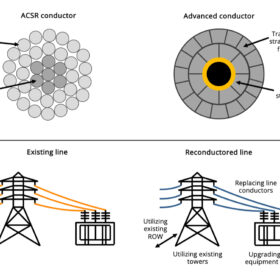
Reconductor existing transmission to ‘unlock’ renewables, says UC Berkeley study
Large-scale reconductoring of existing transmission lines could cost-effectively double transmission capacity within existing rights-of-way, a study says. Renewable energy projects near reconductored transmission lines could more easily interconnect.

U.S. solar has less thanks to give, as El Niño pattern develops
In a new weekly update for pv magazine, Solcast, a DNV company, reports that, in November, weather patterns have started to resemble the characteristic El Niño signature, with low pressure in the northwest Pacific, and an enhanced subtropical jet stream spreading from the Pacific across the southern United States.

War in Ukraine triggered unique phase in renewables history
Human Geographer Thilo Wiertz speaks to pv magazine on the particular features that characterized the trajectory of renewable energies after the outbreak of the war in Ukraine. He emphasized how the geopolitical tensions arising from this conflict have reshaped the political debate about the energy transition, with the energy security perspective gaining in importance.

EU launches first green hydrogen auction with ceiling price of €4.50/kg
The European Union has launched its first green hydrogen auction with a maximum price of €4.50 ($4.91)/kg. The approved projects will receive subsidies for a decade, alongside revenue from hydrogen sales, and must start production within the next five years.
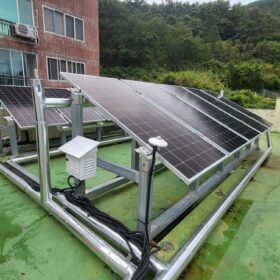
Retrofit solution to convert rooftop PV systems into photovoltaic-thermal arrays
Scientists in Korea have proposed a simple methodolgy to tranform existing PV systems into photovoltaic-thermal (PVT) arrays. They claim the new design offers a cheaper alternative to expensive PVT systems, while enabling easier and faster deployment.
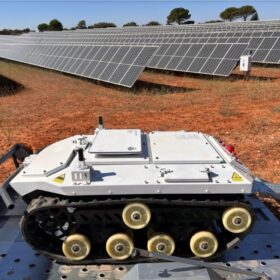
New robots for PV plant inspections
The Antecursor II robot autonomously inspects upper and lower solar panel structures for thermal anomalies, with more than 30 hours of autonomy.
India’s solar installations hit 8.5 GW in first 9 months of 2023
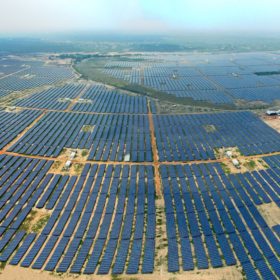
India installed 8.5 GW of solar capacity from January to September 2023, down 25% year on year, with a projected total of 11 GW for the 12 months to the end of December.
