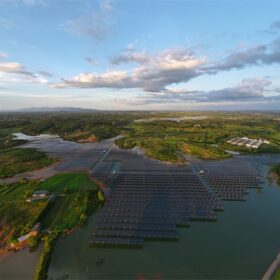
Chinese PV Industry Brief: Guosheng starts building 10 GW HJT cell factory
Guosheng says it will invest CNY 5.2 billion ($722 million) in a new 10 GW heterojunction (HJT) solar cell production facility.
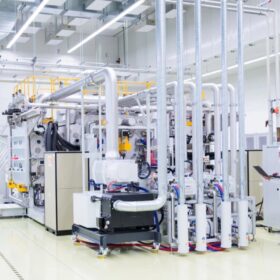
Ascent Solar announces 17.55% efficiency for CIGS tech
Ascent Solar, a US-based manufacturer, has achieved an efficiency of 17.55% for its copper, indium, gallium and selenide (CIGS) technology. It says it plans to release a new CIGS solar module with this efficiency rating soon.
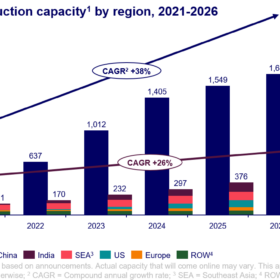
China expected to dominate solar manufacturing through 2026
A Wood Mackenzie report forecasts that China will hold more than 80% of poly, wafer, cell and module manufacturing capacity for the next three years.
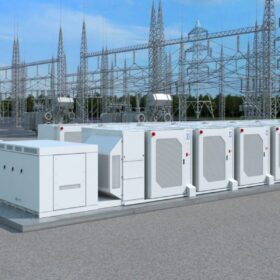
India’s NTPC tenders 3 GW of renewable storage
NTPC, an Indian state-run power producer, recently tendered 3 GW of renewable storage and an engineering, procurement and construction (EPC) package for 630 MW of solar projects.

SunDrive secures funds to expedite production of silver-free HJT solar cells
SunDrive Solar, a Sydney-based startup working to replace the silver in solar cells with copper, has obtained AUD 11 million ($7 million) from Australian Renewable Energy Agency (ARENA) to expand its metallized cell production to a commercial scale of more than 100 MW per annum.

Study shows grid behind recent large-scale battery fire in Australia
Genex Power, the owner of a 50 MW/100 MWh battery system that caught fire in the Australian state of Queensland on Sept. 26, says the blaze was triggered by issues on the grid side of the Tesla Megapack battery unit.
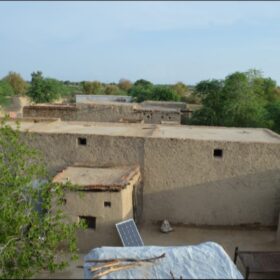
New research sheds light on off-grid solar costs in remote villages
An international research group has assessed the economic feasibility of exclusively powering remote villages in Pakistan with off-grid solar-plus-storage projects. They said that their proposed system configuration has a “justifiable” net present cost.
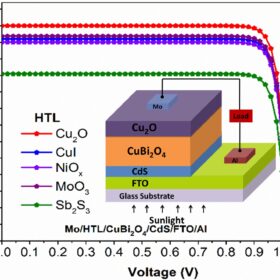
Novel architecture for heterojunction copper bismuth oxide solar cells
Researchers in Bangladesh have simulated a solar cell based on a copper bismuth oxide material, used as an absorber, with a hole transport layer made of copper(I) oxide (Cu2O). In the experiment, the device achieved a power conversion efficiency of 29.2%, an open-circuit voltage of 1.02 V, a short-circuit current density of 32.49 mA/cm2, and a fill factor of 87.91%.
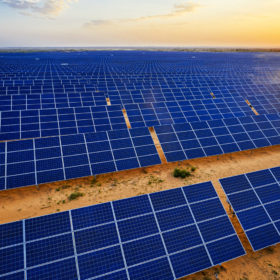
India’s NHPC allocates 3 GW of solar for $0.030/kWh
NHPC has allocated 3 GW of solar capacity at a rate of $0.030/kWh to developers who can set up projects connected to the interstate transmission system across India.
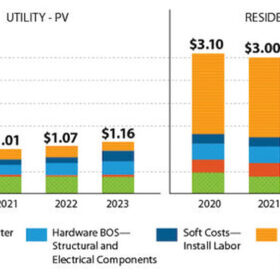
NREL forecasts rising US utility-scale solar costs, falling residential prices
The US Department of Energy’s National Renewable Energy Laboratory (NREL) has updated its annual cost modeling tool in light of the US Inflation Reduction Act (IRA). It has identified higher labor costs for utility-scale solar projects and falling hardware costs due to new manufacturing tax credits.
