
Australian government approves nation’s largest battery
Australia’s federal government has granted approval for a 1.2 GW/2.4 GWh battery system – one of the world’s largest – at a site northwest of Melbourne. The project is owned by Equis Development, with support from the Abu Dhabi Investment Authority and the Ontario Teachers Pension Plan Board.
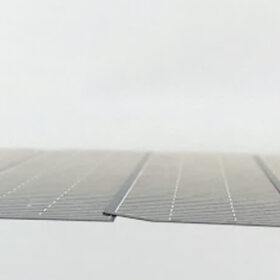
First attempt to build ‘shingled’ perovskite-silicon tandem solar cells
Fraunhofer ISE researchers have demonstrated for the first time the feasibility of the shingling approach with perovskite-silicon tandem solar cells. They also produced full format photovoltaic modules with a power conversion effciency of 22.8%.

Chinese PV Industry Brief: JinkoSolar ships 52 GW in first 9 months of 2023
JinkoSolar says it shipped 52 GW of PV modules in the first nine months of 2023, bringing its total shipments to 190 GW since its foundation.

New reforms, liberalized energy market help untap Philippines’ solar potential
Off the back of recent legislative changes leading to ‘spurred’ solar PV development, combined with an extremely liberal market, a senior solar analyst from cleantech advisory company Apricum told pv magazine that the Philippines is ‘the place’ to rollout solar projects in Southeast Asia.
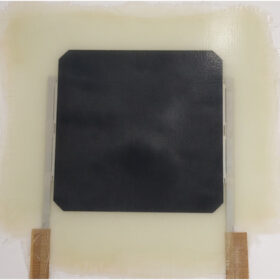
Novel solar module encapsulant based on glass-fiber, epoxy resin
Researchers in Spain have used a glass fiber reinforced composite material with an epoxy matrix containing cleavable ether groups as an encapsulant material for photovoltaic panels. They found that new material still has issues with performance stability, but they also ascertained it ensures lower electrical losses.
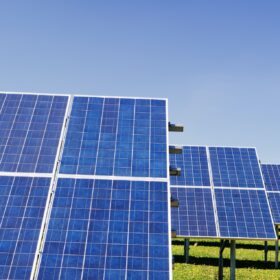
NLC India secures 810 MW solar project in India
NLC India has obtained approval to develop an 810 MW solar project in Bikaner, India.
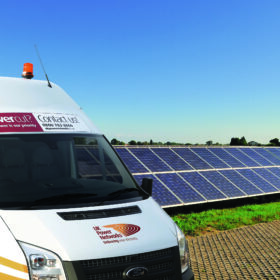
UK Power Networks kicks off 850 MW flexible electricity tender
The UK’s largest transmission system operator, UK Power Networks, recently launched an 850 MW flexible electricity tender. The company’s Distribution System Operator’s head of flexibility markets, Alex Howard, tells pv magazine that the tender will manage demand growth and help get more renewable projects in a ‘big queue’ connected to the network.

Hybrid photovoltaic-tidal energy system for island resorts
Scientists in India have proposed to combine solar PV with tidal energy and storage to cover the entire electricity demand of island resorts. They found the system could help to reduce energy costs for residents and businesses.
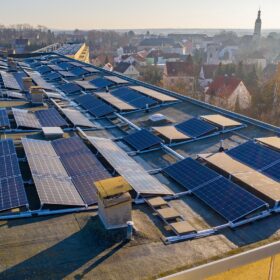
France expands limits of ‘energy communities’
The French government has issued a long-awaited decree to expand the maximum permitted distance between members of energy communities from 2 km to 20 km.

Growth of solar, wind cuts emissions in global electricity sector
Wind and solar are the only sources of electricity that have substantially increased in terms of generation and their share in the global energy mix, according to UK consultancy firm Ember.
