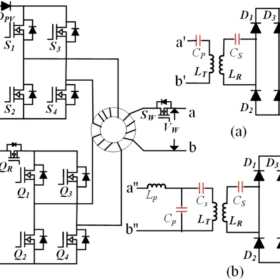
Wireless EV charging based on PV, three-port DC–DC converter
Scientists have developed a wireless charging system for electric vehicles, with a three-port DC–DC converter at its core. They have simulated the system and tested a prototype in their lab and have found it achieved an improved efficiency of 88%.
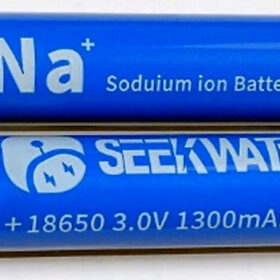
What’s behind the aging mechanism of sodium-ion batteries
Researchers in China have used electrochemical impedance spectroscopy to analyze the state of health of sodium-ion batteries. Extracting four features from the measurements, they were able to create a machine learning model for a temperature-resistant state of health estimation method.
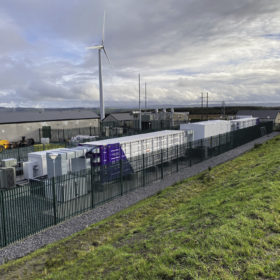
Worldwide battery storage installations up 54% in first half of 2025, June sets monthly record
New data from Rho Motion shows that over half of June’s installations were concentrated in China, maintaining the country’s dominance in the global energy storage market.
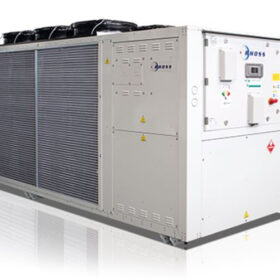
Rhoss launches reversible heat pumps
Conceived for industrial applications, the novel heat pumps can reportedly deliver hot water at 65 C from -10 C up to 35 C of external air, and hot water at 55 C down to -20 C of external air. Their coefficient of performance reaches up to 3.47.

Iberdrola plans 1.32 GW pumped-hydro storage project in Portugal
Iberdrola has started approval processes for a 1.32 GW pumped-hydro storage project in Portugal. The Proyecto de Aprovechamiento Hidroeléctrico de Minhéu is set to become the country’s largest facility of its kind once completed.

Ukraine’s largest battery storage project enters commissioning phase
Ukraine’s 200 MW/400 MWh battery project dwarfs most Eastern European installations, and is expected to come online in October 2025, ahead of the winter.

Superdielectrics unveils Faraday 2 battery as a polymer-based alternative to Li-ion
Superdielectrics launches the Faraday 2 battery, advancing a water-based, metal-free approach to home storage, from a UK-based facility.
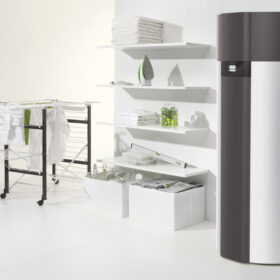
Panasonic launches new domestic hot water heat pump
The Aquarea DHW Heat Pump utilizes propane as the refrigerant and is reportedly able to reach maximum temperatures of 65 C. The standalone unit supports PV contact and is compatible with external recirculation pumps.

‘Grid-forming technology is no longer experimental – it’s here and working’
In grids increasingly dominated by renewables, grid-forming technology is emerging as critical tool for maintaining stability and ensuring reliable power system operation. In this interview with ESS News, Rui Sun, Sungrow’s Deputy General Manager-Grid Technology Center, explains how grid-forming works, why it matters, and where the technology is already proving its value. He elaborates on technical challenges, regulatory gaps, and why grid-forming could soon become the new industry standard.

World’s largest vanadium flow battery goes online in China
A giant solar-plus-vanadium flow battery project in Xinjiang has completed construction, marking a milestone in China’s pursuit of long-duration, utility-scale energy storage.
