
‘Back contact will reach cost parity with TOPCon before end of decade’
During a pv magazine Week Europe 2025 webinar, panelists forecast back contact (BC) solar cells’ market share will draw level with TOPCon towards the end of the decade, before tandem technology begins large-scale momentum in the early 2030s.

India’s Vikram Solar commissions 5 GW automated module plant
Vikram Solar says its new 5 GW Vallam facility in Tamil Nadu lifts its module manufacturing capacity to 9.5 GW and is built on tunnel oxide passivated contact (TOPCon) technology with future heterojunction upgrades.
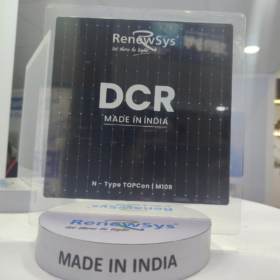
RenewSys launches TOPCon solar cells at REI 2025
RenewSys India unveiled its M10R n-type tunnel-oxide passivated contact (TOPCon) solar cells at the recent Renewable Energy India (REI) Expo 2025 in Greater Noida, India.

Loom Solar unveils 730 W modules, 1.2 GW factory plan in India
India’s Loom Solar says it will build a 1.2 GW module factory in the Indian state of Uttar Pradesh and expand production of high-efficiency tunnel oxide passivated contact (TOPCon) and heterojunction (HJT) modules.
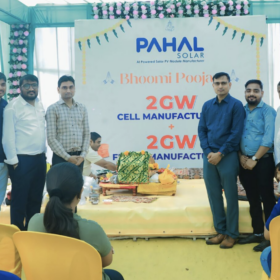
Pahal Solar to build 2 GW solar cell and frame plant in India
Pahal Solar says it will produce 2 GW of tunnel-oxide passivated contact (TOPCon) solar cells and 2 GW of aluminum frames at its new facility in Gujarat, India, with full commissioning expected by late 2026.
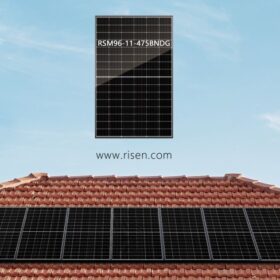
Risen presents 475 W TOPCon solar panel with 23.8% efficiency
Chinese solar module maker Risen Energy has introduced a 475 W bifacial solar module with a power conversion efficiency of 23.8% to the Australian market, targeting the rooftop market.

World Green Energy to build 2 GW solar cell, 1.2 GW module plant in India
World Green Energy signed a land sublease with Tata Steel Special Economic Zone Ltd for 50 acres in Odisha, India, to build a 2 GW tunnel oxide passivated contact (TOPCon) solar cell and 1.2 GW module factory.

Gautam Solar unveils 630 W TOPCon module for utility-scale solar projects
Gautam Solar has introduced 630 W R-Series tunnel oxide passivated contact (TOPCon) modules for utility-scale PV projects, approved under India’s Approved List of Models and Manufacturers (ALMM) and Bureau of Indian Standards (BIS).

RP Sanjiv Goenka Group to build 3 GW solar cell plant in India
RP Sanjiv Goenka Group will invest INR 30 billion ($360 million) in a 3 GW solar cell facility with a 60 MW captive solar and storage system in Uttar Pradesh, India.

Avaada Electro unveils n-type TOPCon PV modules
Avaada Electro, the solar manufacturing arm of Avaada Group is presenting its n-type G12, G12R and M10L tunnel oxide passivated contact (TOPCon) solar modules at the RE+ 2025 trade show in Las Vegas.
