
Tracker monitoring software to protect, optimize solar sites
Software can boost production and mitigate risks.

Scientists classify weather types based on extreme photovoltaic output events
Scientists used a year’s worth of data from East China to analyze what weather conditions affect abnormal, high, and low PV output days. They also constructed a simple extreme output prediction model and examined the atmospheric circulation anomalies corresponding to extreme output events.

Acen secures approval for 1.2 GW solar-plus-battery project in Australia
Acen Australia’s plan to develop a 600 MW solar farm and 600 MW/1,200 MWh battery energy storage system in Australia has received a major boost, with the New South Wales Independent Planning Commission (IPC) giving its tick of approval.
Ternary organic solar cell based on dimerized small molecule achieves 18.12% efficiency
A team from the Southern University of Science and Technology in China has designed a small molecule donor to act as a third component in ternary organic cells. It helped to achieve a power conversion efficiency of 18.26% when fabricated with a PM6:BTP-eC9 organic solar cell.

Rodrigues and Curacao have PV lessons for us all
With the world’s islands already experiencing some of the worst effects of climate change, much could be learned from their ability to demonstrate the viability of 100% clean energy systems. Greening the Islands’ Gianni Chiannetta examines the case for two islands in the Caribbean Sea and Indian Ocean.

The Hydrogen Stream: MIT shows hydrogen can be made from aluminum, caffeine
Researchers from the Massachusetts Institute of Technology (MIT) claim they can efficiently produce hydrogen from recycled aluminum cans in seawater by combining them with gallium-indium and caffeine.

Natron Energy to build GW-scale sodium-ion battery factory in U.S.
The new planned manufacturing facility will produce 24 GW of Natron’s sodium-ion batteries annually. Natron says its batteries outperform lithium-ion batteries in power density and recharging speed, do not require lithium, cobalt, copper, or nickel, and are non-flammable. The plant will be the first double-digit GW sodium-ion plant in the United States.
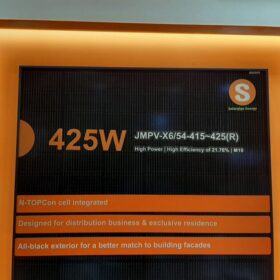
Chinese PV Industry Brief: Solargiga forecasts net loss for H1
Solargiga says it expects a net loss between CNY 95 million ($13.3 million) and CNY 115 million for the first half of 2024.
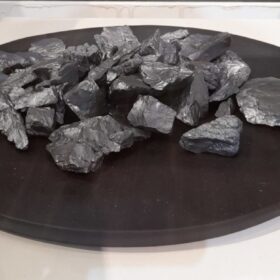
Tokuyama plans polysilicon factory in Vietnam
Japan’s Tokuyama says it will build a new polysilicon manufacturing facility in an industrial park in Ba Ria-Vung Tau province, Vietnam.
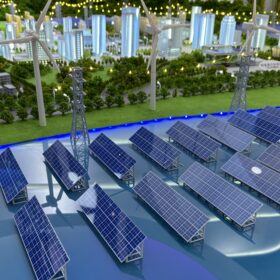
Indian oil company launches 1 GW wind-solar hybrid tender
ONGC, India’s largest crude oil and natural gas company, is now accepting bids to set up 1 GW of wind-solar hybrid projects (500 MW of solar plus 500 MW of wind) for captive consumption. Bidding closes on Oct. 23.
