
Philippines issues contracts for microgrids in unserved areas
The Philippines Department of Energy (DOE) has awarded contracts for eight microgrids in unserved areas, including hybrid systems with solar and energy storage, as well as diesel gensets. Plans are now underway for a second competitive bidding round to develop microgrids in other areas without electricity access.
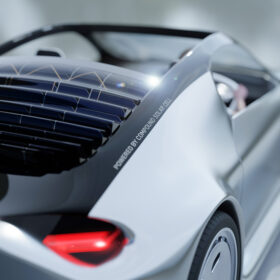
Vehicle-integrated photovoltaics making the moves from niche to mainstream
A new report from the International Energy Agency’s Photovoltaic Power Systems Programme (IEA-PVPS) looks at success factors required to take vehicle integrated photovoltaics (VIPV) from niche to mainstream based on a survey of 110 experts in the topic of transport and PV.
Malaysia introduces rebate scheme for residential PV
The Malaysian authorities have introduced a rebate scheme for residential PV, offering new net-metering users rebates of up to MYR 4,000 ($843.60). Applications are open until the end of the year, with allocation to be determined on a first-come, first-served basis.
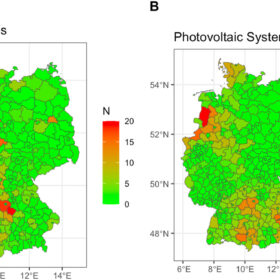
Legitimation, competition drive citizen-led PV initiatives in Germany
Scientists have analyzed what factors affect the emergence of solar associations and cooperatives in Germany. Applying the organizational ecology theory, they found a collective solar initiative in a given district may likely lead to creation of similar experiences in the same district.

Poland tops 17 GW of PV capacity
Poland added around 4.6 GW of new PV capacity in 2023, according to new data from research institute IEO.

Photovoltaics for elevated metro stations
Elevated metro stations may highly benefit from rooftop solar power generation combined with battery storage, new research from China suggests. The scientists proposed a system design that promises a payback time of 10.2 years without including the option of injecting surplus power into the grid.

India allocates 1.5 GW of solar at $0.031/kWh
The Indian government has allocated 1.5 GW of solar at $0.031/kWh. The winning developers will set up the projects on a build-own-operate basis and supply power under 25-year power purchase agreements (PPAs) with Solar Energy Corp. of India (SECI).

Bluetti releases 2.4 kW portable power station
Bluetti has unveiled a new portable, weatherproof power station featuring a lithium iron phosphate battery with 1,536 Wh of power capacity and a rated output of 2,400 W.
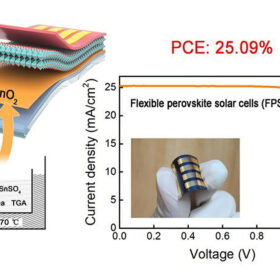
Flexible perovksite solar cell with tin oxide electron transport layer achieves 25.09% efficiency
Researchers in China have developed a new chemical bath deposition technique to deposit tin oxide on a perovskite cell’s flexible substrate without requiring a strong acid. The resulting cell has achieved a certified efficiency of 24.90% and remarkable stability.
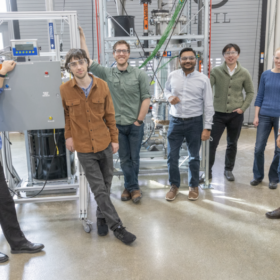
US government funds pilot project for heated sand energy storage
The US Department of Energy is funding a pilot project to demonstrate the commercial viability of storing energy in heated sand, which is capable of producing 135 MW of power for five days.
