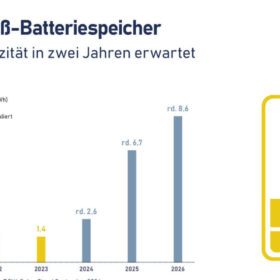
Big-battery storage capacity could increase fivefold in Germany by 2026
Industry body the Bundesverband Solarwirtschaft (BSW-Solar) expects around 7 GWh of large-scale battery storage to be added during that period.
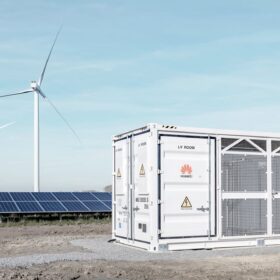
Vattenfall enters large-scale battery storage business
The energy company announced plans to invest extensively in large-scale battery business in response to the growing demand for flexibility, adding 500 MW of battery storage annually.
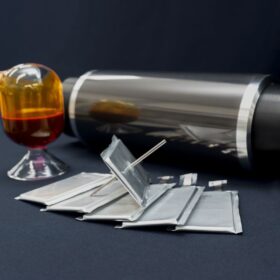
LG Chem develops material capable of suppressing thermal runaway in batteries
LG Chem has announced that its Platform Technology R&D team has developed a temperature-responsive Safety Reinforced Layer (SRL), a material which is described as capable of surpressing thermal runaway. The material was analyzed in collaboration with researchers from Pohang University of Science and Technology (POSTECH) in South Korea, while the safety verification was conducted in partnership with LG Energy Solution.

Why $0.25 per kWh electricity makes off-grid solar-plus-storage a smart investment in U.S.
Once electricity prices hit $0.25/kWh, disconnecting from the grid with residential solar-plus-storage starts to become financially viable, with sunny places making strong financial arguments. With recent drops in battery prices, the case for leaving the grid has grown even stronger.
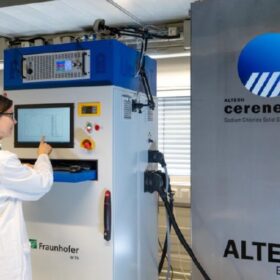
Altech’s sodium chloride solid state battery exceeds expectations
Western Australian battery technology company Altech Batteries has announced its first Cerenergy ABS60 salt-based battery energy storage system prototype is online and operating successfully across a range of temperatures, confirming its thermal stability and commercial viability.
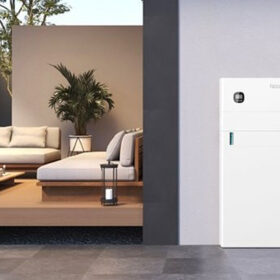
Hinen unveils all-in-one home energy storage solution
Chinese manufacturer Hinen has launched an integrated battery energy storage system with power options ranging from 3.6 kW to 25 kW for on- and off-grid residential applications.
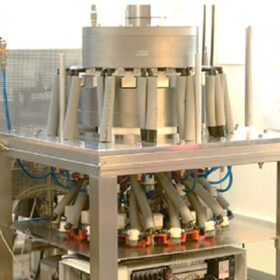
Magnetocaloric heat pump for residential applications
Researchers in Denmark built a magnetocaloric heat pump prototype for heating purposes in residential buildings. Although more work is needed to bring the system closer to commercial maturity, it can reportedly achieve a 36.9 % heating power improvement with measurement feedback control.
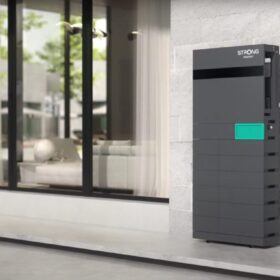
Strong Energy launches residential lithium iron phosphate battery
Cologne-headquarterered Strong Energy’s new all-in-one battery storage system Alfred 10 comes in different versions with a nominal capacity between 12 kWh and 24 kWh.
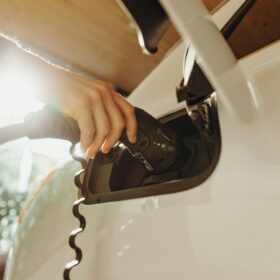
Standalone PV-hydrogen-battery system for EV charging
Researchers in Pakistan have tested several configurations of an offgrid PV-hydrogen system intended to power EV chargers. The system achieved the lowest levelized cost of electricity when it was combined with battery storage.

Panasonic testing smart thermostats in residential heat pumps
Panasonic will integrate new smart thermostats and an energy management software in its Aquarea system from November. The new solutions are also designed to enable PV system owners to manage their heat pumps based on local weather forecasts.
