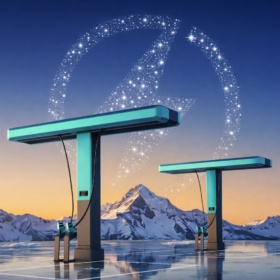
BYD unveils EV batteries that can recharge in 10 minutes
The Chinese electric vehicle maker said the new batteries can charge from 10% to 70% in 5 minutes and from 10% to 97% in 9 minutes. The company also announced a new generation of its Flash Charging Technology.
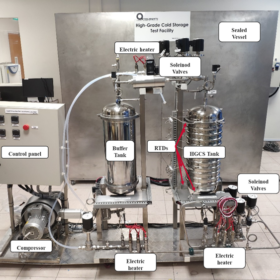
Cold thermal storage crucial to boosting liquid-air energy storage efficiency
Researchers reviewed 110 studies on cold thermal energy storage in liquid-air energy storage, finding that cold storage performance has a far greater impact on system efficiency than previously assumed. While phase change materials offer high theoretical efficiency gains, simpler packed-bed sensible heat systems are currently the most mature and cost-effective option, with further experimental validation needed to bridge the gap to large-scale deployment.
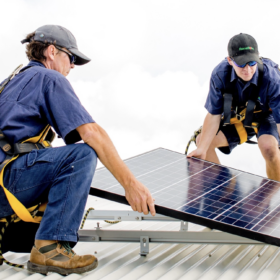
AI energy management system to unlock VPP potential
Researchers at the University of New South Wales (UNSW) and installer Aussie Solar Batteries will develop and test AI-driven energy management platforms to optimize solar and battery systems and support virtual power plant (VPP) deployment.

European Commission proposes Made in EU requirements for solar inverters, cells
The Industrial Accelerator Act says solar projects awarded through public procurements or other public support schemes would need to feature Europe-made solar inverters and cells within three years after the act becomes law. For battery energy storage systems, similar requirements would be introduced using a phased approach from one year after the act enters force.
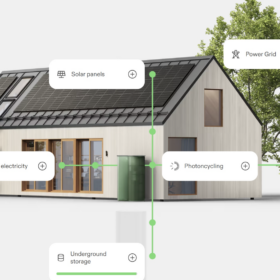
Photoncycle raises €15 million to launch seasonal hydrogen home storage
Norway’s Photoncycle has raised €15 million ($17.4 million) to develop a seasonal home energy storage system that converts excess solar power into ammonia-based hydrogen for winter use.

EU opens third cross-border solar tender
The EU’s third cross-border solar tender is offering a share of €54.9 million ($63.8 million) to solar-plus-storage projects in selected Bulgarian districts and ground-mounted solar projects in Finland, with funding provided by Luxembourg. The deadline for applications is September 1.
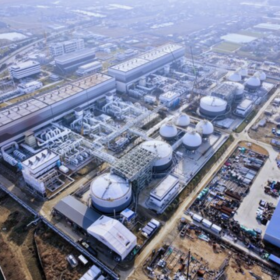
China’s 600 MW/2.4 GWh storage plant becomes world’s largest CAES site
With 600 MW of installed capacity and 2,400 MWh of storage, the Huai’an Salt Cavern project is now the world’s largest compressed air energy storage (CAES) facility, surpassing the 300 MW/1,500 MWh project commissioned earlier this year that previously held the title.
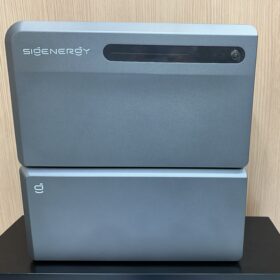
Sigenergy unveils 2.68 kWh battery for balcony PV
Sigenergy has launched a 2.68 kWh balcony storage system with four MPPTs and up to 4 kW of PV input. The scalable LFP solution offers 800 W grid output, 1.2 kW backup power, and expansion up to 18 kWh per tower.
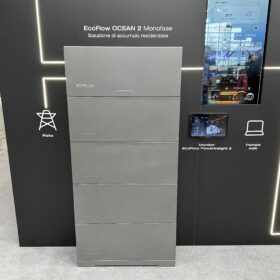
Ecoflow debuts 5 kWh residential inverter battery with 100% depth of discharge
EcoFlow has unveiled the single-phase Ocean 2 all-in-one battery inverter at Key Energy in Rimini. The system features a more compact 5 kWh LFP battery stackable up to 30 kWh and offering 100% depth of discharge, 3.4 kW discharge power, and IP66 protection.
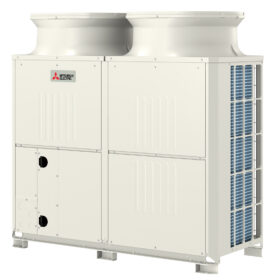
Mitsubishi Electric Trane announces new heat pump line for hydronic heating
The systems deliver outlet water temperatures up to 74 C, operate in ambient temperatures from -25 C to 43 C, and can be cascaded in groups of up to 16 units for larger commercial applications.
