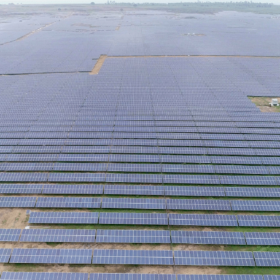
India’s solar potential estimated at 10.8 TW
A new study by the Energy and Resources Institute (TERI) has estimated India’s total solar potential at 10,830 GW, significantly higher than the previous 2014 assessment of 748 GW by the Ministry of New and Renewable Energy (MNRE). The study revisits conventional solar deployment areas such as barren and unculturable lands and explores additional avenues to expand the country’s solar potential.

Hungary’s solar capacity nears 8 GW
Data from transmission system operator MAVIR shows that solar energy production in Hungary reached a new peak on June 13, producing enough energy to serve the country’s domestic electricity requirements entirely from renewables.

Abandoned coalmines could host 10% of global solar capacity
A survey of mines closed since 2020 and those planned to close by 2030 present an opportunity for installing nearly 300 GW solar on already-developed lands, finds a report from Global Energy Monitor.

Netherlands allocates 1.8 GW of PV in latest round of SDE++ program
The Netherlands has awarded 1.79 GW of solar capacity under its 2024 SDE++ renewable energy subsidy scheme, including 1,237 MW of ground-mounted projects, 448 MW of industrial rooftop systems, and 107 MW of floating installations.

Scientists see potential for 3,000 PV-powered methanol sites in Europe
Researchers have analyzed the potential implementation of green methanol from CO2 capture in existing industries, based on European GIS data. While they found 9,213 theoretically viable municipalities, the number fell to 3,016 when considering the space needed for a PV installation around the plant.

US solar grazing undergoing rapid growth
The scale of livestock grazing in agrivoltaic installations is much larger than previously understood, according to the first solar grazing census by the US National Renewable Energy Laboratory (NREL) and the American Solar Grazing Association.
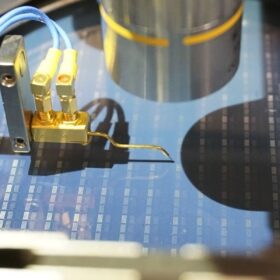
New SWIR line-scan camera for silicon PV quality control
France’s New Imaging Technologies has launched a short-wave infrared line-by-line scanning camera for high-definition and high-performance silicon PV inspection systems.
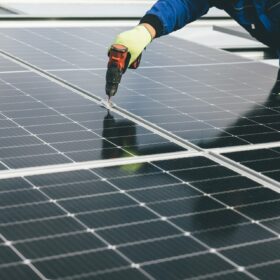
Tender opens for solar solutions in Ukraine
The United Nations Development Programme (UNDP) has launched a tender for the provision of solar solutions in Ukraine. The deadline for applications is July 8.

Germany deploys 1.1 GW of PV in May
Germany installed 1.1 GW of new solar in May, bringing total installations for the first five months of 2025 to 5.97 GW, slightly below the 6.16 GW added over the same period in 2024.

Nigeria expected to hit just 1.5 GW of solar by 2035
UK-based consultancy GlobalData forecasts that Nigeria may install only 678 MW of solar capacity by 2030. The country is expected to surpass 1 GW in 2033 and reach 1.5 GW by 2035.
