
Teledyne Flir presents new PV inspection products
Teledyne Flir, a US-based sensing solutions company, has launched new PV inspection tools – including a clamp meter, irradiance meter, and I-V curve tracer – alongside two product kits targeting solar installers, utilities, and PV manufacturers.
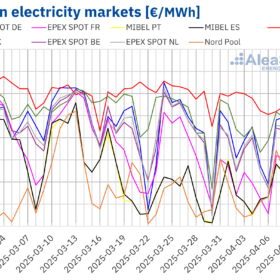
European electricity prices stabilize as gas, CO2 prices drop
AleaSoft Energy Forecasting’s latest analysis finds electricity prices across the major European markets during the second week of April were largely in line with the week prior, despite gas and CO2 futures reaching their lowest settlement since September and April last year. Meanwhile, France and Italy broke their daily records for solar production.

European renewables PPA market hit 19 GW in 2024, says Wood Mackenzie
Wood Mackenzie says Europe’s power purchase agreement (PPA) market was dominated by solar and wind deals in 2024, with an increase in battery-linked contracts as buyers looked to hedge against negative pricing periods.

Key takeaways from SolarEx Istanbul
The 17th edition of SolarEx Istanbul, which took place from April 10 to April 12, was the largest to date. As Turkey’s solar deployment increases, there was discussion on how to manage future installations, develop untapped domestic markets, and secure future investments.
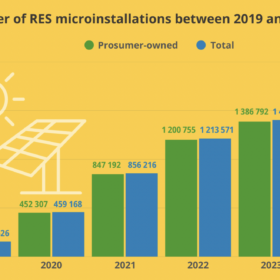
Poland’s micro-solar growth slows slightly in 2024
Poland’s micro-scale solar sector grew to 1.5 million systems and 12.7 GW in 2024, with slower growth in both new installations and energy exports, according to the country’s energy regulator.

India installs 24 GW of solar in fiscal 2025
India added 23.8 GW of new solar capacity in fiscal 2025, up 58.5% year on year, according to JMK Research.

Colombia introduces new rules for energy communities
Colombia’s energy regulator has approved new regulations allowing the creation of energy communities, aiming to add at least 1 GW of renewable capacity to the national grid.

Tender opens for solar minigrids in Fiji
The United Nations Development Programme (UNDP) is running a tender for solar minigrids and communication infrastructure in rural areas of Fiji. The deadline for submitting expressions of interest is April 17.

Multi-constraint modeling for agrivoltaics
Researchers at Cornell University in the U.S. have developed a novel optimization model for agrivoltaic site design and benefits, which was demonstrated using irrigation-optimization relative to economic and environmental goals.
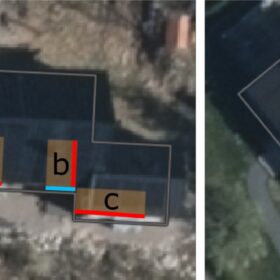
Using LiDAR data to improve modeling of PV system tilt, azimuth
Researchers in Sweden have developed a method to use LiDAR data to enable more precise tilt and azimuth modeling of solar PV and solar thermal capacity at a regional or substation level. The model could enable aggregators and grid operators to improve grid planning.
