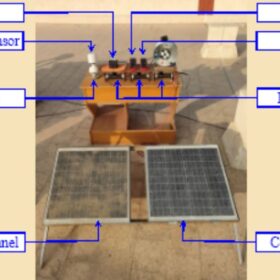
Anti-soiling coating increases PV panel current in arid regions by 64.7%
Scientists in Egypt have created an anti-soiling coating for solar panels by mixing ethanol, deionized water, ammonium hydroxide and tetraethyl orthosilicate. They tested a coated panel outdoors for ten months and found that the panel showed a 64.7% higher current compared to reference modules without coating.

Wave energy tech could drive down solar costs in Australia
Simon Renwick, the founder of Australian wave energy specialist WaveX, says the wave power generator it is developing can be combined with solar to lower costs and ensure dispatchability.

Masdar, Sarawak Energy, Gentari plan large-scale floating solar in Malaysia
Abu Dhabi Future Energy Co. (Masdar) is teaming up with Malaysia’s Sarawak Energy and Gentari to assess the potential for a large-scale floating solar array on the northwestern coast of Borneo.

UK startup launches AI air-source residential heat pump
UK-based Wondrwall says its new heat pump has a coefficient of performance of up to 4.99, with an inlet-outlet temperature of 30 C to 35 C. The system is based on the company’s AI-powered Home Energy Management System (HEMS) to efficiently manage household energy flows.
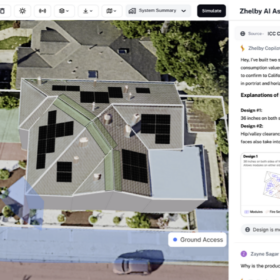
U.S. startup offers rooftop solar software for installers
Software company Aether Energy has launched in Europe to support residential and commercial rooftop solar PV installer businesses, from pre-sales to after-sales and energy monitoring. It recently secured seed capital to finance its plan to expand its business.

Turkey launches tender for 800 MW of solar
Turkey’s Ministry of Energy and Natural Resources has launched a tender for 800 MW of solar across six proposed projects. The deadline for applications is Jan. 27, 2025.
Ontario high court rules in favor of solar FIT optimization
The Ontario Court of Appeal has rejected a claim from the province’s Independent Electricity System Operator (IESO), which accused solar suppliers with feed-in-tariff (FIT) contracts of breaching their agreements by repowering their systems.

Chile publishes 2025-28 energy auction plan
Chile’s energy regulator has published its 2025-28 energy auction plan to secure about 22,500 GWh of new power contracts.

GoodWe launches residential solar carport
GoodWe has developed a residential solar carport that features its Polaris building-integrated PV (BIPV) panels. The carport, which is available in 4.8 kW and 8.0 kW variants, is designed to host one or two vehicles, respectively.

Fixing faulty inverters in PV plants via root cause analysis
Kiwa PI Berlin has fixed faults in inverters at a PV plant in South Africa by using root cause analysis. The project had experienced up to 130 failures related to insulated gate bipolar transistors (IGBTs).
