
Bangladesh approves 220 MW solar project, its largest to date
Bangladesh has givern approval to a 220 MW plant in Sonagazi, partly funded by the Islamic Development Bank.

ABB finalizes acquisition of Gamesa Electric
The Swiss group acquired Gamesa Electric’s power electronics business in Spain from Siemens Gamesa. The financial terms of the deal were not revealed.

California lawmakers urge CPUC to enforce utility interconnection timelines
A coalition of 18 California legislators has formally urged the California Public Utilities Commission (CPUC) to enforce regulations under “Rule 21” regarding the interconnection of customer-sited solar and energy storage systems.

Saudi Arabia secures financing for 15 GW of new solar and wind capacity
A consortium led by Acwa Power, Water and Electricity Holding Co. (Badeel) and Saudi Aramco Power Co. has secured a $5.9 billion senior debt facility for seven Saudi Arabia renewable energy projects totaling 15 GW across solar and wind.

Indonesia think tank seeks partner for offshore floating solar study
Indonesia’s Institute for Essential Services Reform (IESR) is seeking proposals by Dec. 3 for a preliminary feasibility study on offshore floating solar development in Sulawesi, including techno-economic assessments and regulatory analysis.

Dominican Republic brings Caribbean’s largest solar plant online
The Dominican Republic has switched on the 162.6 MW Cotoperí Solar complex, developed by Acciona Energía and local investors. It is the largest PV installation in Central America and the Caribbean.
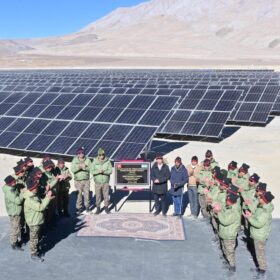
NTPC commissions solar-hydrogen-based microgrid in India
NTPC has developed a standalone solar microgrid system that uses hydrogen as the storage medium to deliver 200 kW of round-the-clock power throughout the year. Designed to replace diesel gensets at off-grid Army locations, the system provides a reliable and sustainable power supply even in harsh winter conditions, where temperatures can drop to –40 C at an altitude of 4,500 meters.
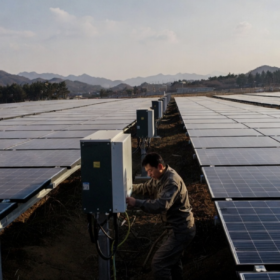
South Korean solar inverter industry raises cybersecurity concerns
South Korean solar inverter makers have jointly launched a new association of inverter manufacturers to coordinate domestic production, safeguard local expertise, and address import-driven market issues and grid stability challenges.
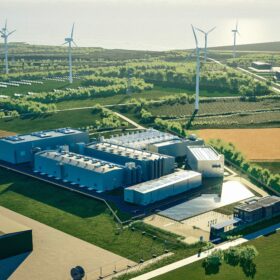
The Hydrogen Stream: EWE begins work on 320 MW hydrogen plant in Germany
EWE says construction has started on its 320 MW hydrogen plant in Germany as it seeks regulatory reforms, while Japan Suiso Energy and Kawasaki Heavy Industries have broken ground on a commercial-scale liquefied hydrogen terminal set to begin operations in 2030.

Chinese PV Industry Brief: January-October solar additions reach 252.87 GW
China’s National Energy Administration (NEA) says developers installed 252.87 GW of new PV capacity from January to October 2024, including 12.6 GW in October alone.
