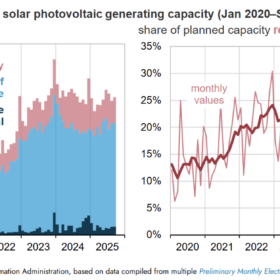
US utility-scale solar delays ease as market stabilizes
The US Energy Information Administration (EIA) says improving project timelines point to greater stability in the United States utility-scale solar pipeline.
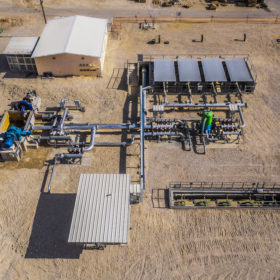
Cash flow analysis shows adiabatic compressed air storage is viable for 10–100 h applications
Scientists in the United Kingdom have compiled a new database of adiabatic compressed air energy storage projects. Using this data, they were able to determine the experience rate and identify the conditions under which the technology would be economically viable. According to their findings, costs have declined at a 15% learning rate since 2013.

Chinese scientists build 18%-efficient organic solar cells with enhanced stability
Chinese researchers have demonstrated organic solar cells with novel encapsulation and a protective interfacial layer for enhanced stability and efficiency. The best performing cell based on the new approach retained 94% of its initial power conversion efficiency after standards-based damp heat testing for 1,032 hours damp heat and across 200 thermal cycles.

Tata subsidiary commissions NHPC solar project in India
Tata Power Renewable Energy Ltd. (TPREL) says its new 300 MW solar project in the Indian state of Rajasthan uses domestic tech under the nation’s domestic content requirement (DCR).

Namibia opens 120 MW solar tender
NamPower is running a tender for the procurement of six 20 MW solar projects on an independent power purchaser basis. The bid closing date is Jan. 30, 2026.
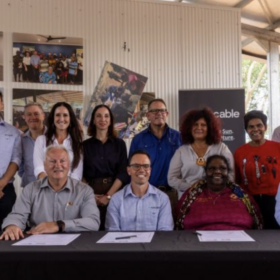
SunCable secures Northern Territory land deal for Australian solar farm
SunCable has struck a multimillion-dollar deal with traditional owners that will enable it to develop the biggest solar farm in Australia on a cattle station in the Northern Territory.

Pexapark notes significant increase in European PPAs in October
Swiss-based analytics firm Pexapark recorded 30 power purchase agreements (PPAs) in Europe in October totaling 2.06 GW of contracted capacity, the highest monthly volume reported so far this year.
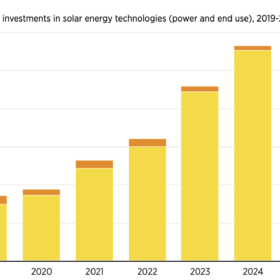
IRENA says $554 billion invested in solar technologies in 2024
The International Renewable Energy Agency (IRENA) says solar is the only renewable energy technology where current investment levels are approaching the annual average needed through to 2030 to align with its 1.5 C pathway.
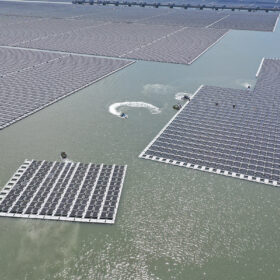
Taiwan tightens rules for ground-mounted, floating solar
Revisions to Taiwan’s Environmental Impact Assessment Act, Tourism Development Act and Geology Act introduce requirements for environmental impact assessments prior to development of solar projects, and rules out solar installations larger than one hectare in scenic spots and geographically-sensitive areas.

Germany’s January-October solar additions reach 13 GW
The Federal Network Agency (Bundesnetzagentur) says Germany’s installation pace reflects shifting demand patterns between ground-mounted and rooftop PV systems.
