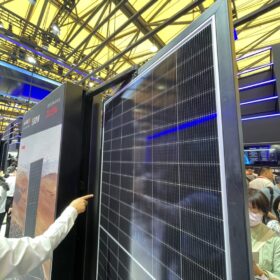
Chinese PV Industry Brief: Snapshots from SNEC 2025
Solar manufacturers signed an estimated 15 GW of module sales and supply deals at SNEC 2025 PV Expo in Shanghai last week. Major contracts included JinkoSolar’s 1.75 GW order for Saudi Arabia’s SPPC project and JA Solar’s 2 GW agreement to support solar manufacturing in India.

Dutch startup offers roof coating increasing PV safety
AllShield Coatings says that its fire-resistant product can be installed under a new roof covering or applied to the roofing material of existing roofs. It weighs 2.8 kg/m2 and reportedly serves as an effective fire-resistant layer, significantly reducing the risk of fire spreading.
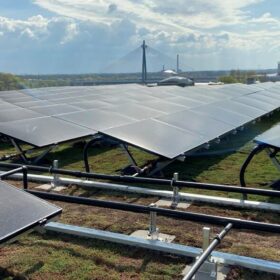
Stadium in Austria now hosting Europe’s largest PVT system
Austria has installed Europe’s largest photovoltaic-thermal (PVT) solar system at a stadium, using Sunmaxx modules combined with geothermal energy and brine heat pumps to provide climate-neutral electricity and heat.
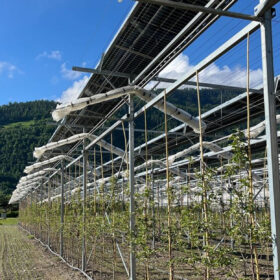
Agrivoltaics for cherries
Switzerland’s Energie360° and solar tech specialist Insolight have agreed to build a 1,300-panel agrivoltaic plant on a cherry farm in Leuggern, Switzerland. The facility will combine crop protection and dynamic light management.

JA Solar, ARTsolar agree to expand PV module manufacturing in South Africa
JA Solar has set up a manufacturing partnership with South Africa’s ARTsolar to annually produce 340 MW of PV modules, supporting domestic content rules under South Africa’s procurement programs and reducing reliance on imports.
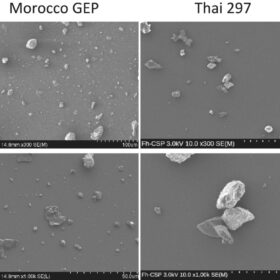
Different dust, different impact on PV module performance
Scientists in Germany have collected dust from Qatar, Morocco and Thailand to analyze the impact on the performance of uncoated solar glass and uncoated PV mini-modules. Their analysis has shown that dust coverage could range from 4% to 60%.
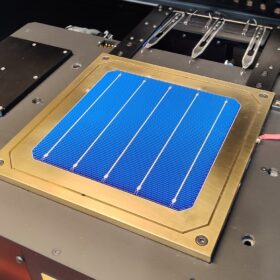
New study confirms sensitivity of heterojunction solar cells to soldering flux
Researchers in South Korea have found that the contamination by small amounts of soldering flux residues during heterojunction PV module manufacturing can induce significant long-term performance degradation. Careful control of flux application methods and incorporating drying steps are proposed as potential solutions.
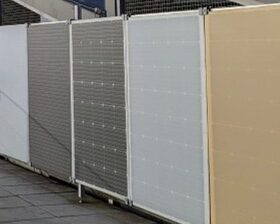
Glass-free, colored PV modules for building rooftop retrofits, façades
Researchers from Swiss and Austrian institutions have demonstrated a novel design for a glass-free, structurally robust silicon PV module. With a weight below 6 kg/m2, the targeted application is older buildings with weak roof structure.

Ahaan Solar to start 600 MW TOPCon module factory by mid-2025
Ahaan Solar, part of Airox Nigen Equipments, plans to start production from the first 600 MW phase of its 2 GW solar module factory in Haryana, India, by mid-2025. The facility will use tunnel oxide passivated contact (TOPCon) technology to produce high-efficiency modules for domestic and export markets.

Optimal parameters for perovskite-silicon tandem solar cell manufacturing
Researchers in the Middle East claim to have identified the optimal parameters for the commercial production of perovskite-silicon tandem solar modules across several locations. Their analysis showed that manufacturing costs may currently be as low as $0.387/W, with the prospect of reaching $0.25/W in seven years.
