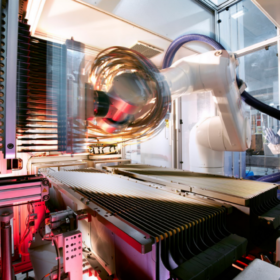
Trina Solar, JA Solar, JinkoSolar launch China’s first PV patent pool for TOPCon technologies
China’s solar industry has launched its first TOPCon-focused patent pool, led by Trina Solar, JA Solar, and JinkoSolar, to streamline licensing, reduce disputes, and strengthen IP coordination at home and abroad.

Inside PV Manufacturing: Belga Solar’s module factory in Belgium
In the latest article of a new series on solar manufacturing facilities around the world, pv magazine presents Belga Solar’s solar manufacturing facility in Wallonia, Belgium.

Dutch buildings could host 36 GW of façade solar capacity
A new report from the Netherlands Enterprise Agency (RVO) estimates that building façades could offer up to 36 GW of technical solar PV potential, representing a significant but largely untapped resource. However, high costs, regulatory complexity, and lower performance compared to rooftop systems limit widespread adoption, currently making façade PV a niche solution for specific building types.

Rethinking silver paste design for TOPCon, LECO solar cells
Researchers in China have developed an evaluation framework to better assess fine-line silver pastes for TOPCon and LECO solar cells. The approach links laboratory characterization directly with production-line performance, addressing the limitations of conventional evaluation methods.
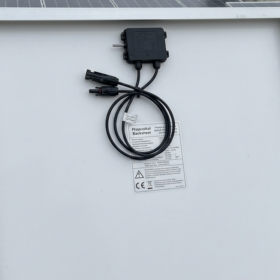
No evidence of PFAS leaching from solar panels, study finds
Researchers in the United States reviewed claims about PFAS in solar panels and found that while fluoropolymers may be used in limited components like backsheets or coatings, there is no confirmed evidence of PFAS leaching from commercially deployed modules. The study highlights widespread confusion between different PFAS types and emphasizes the need for clearer communication and transparency around fluoropolymer use in PV technologies.

U.S. startups announce partnership to offer domestic perovskite-silicon tandem solar modules
Solx and Caelux said they will supply 3 GW of Solx Aurora modules, which combine domestic silicon cells from Suniva and a top layer of Caelux “Active Glass” to reach 28% efficiency, with commercial volumes available in the U.S. market by 2027.
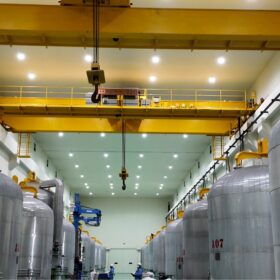
Inside PV Manufacturing: United Solar’s polysilicon factory in Oman
In the first article of a new series on solar manufacturing facilities around the world, pv magazine presents the polysilicon facility of United Solar in Oman. The plant has a production capacity of 100,000 metric tons per year and is currently the largest of its kind outside China.

Fabricating perovskite solar cells with robotic boxes
An international research team has developed an AI-driven robotic platform that autonomously designs, fabricates, and optimizes perovskite solar cells, completing the full experimental workflow in a closed-loop system. Using the platform, the researchers fabricated and tested more than 50,000 devices, achieving efficiencies of up to 27%.
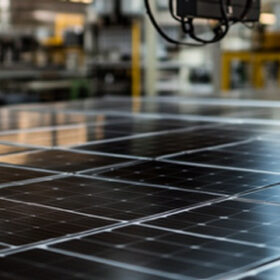
Tandem PV launches commercial perovskite-silicon manufacturing in California
Tandem PV has opened a 40 MW commercial demonstration factory in Fremont, California, marking a significant transition for perovskite-silicon technology from laboratory development to repeatable manufacturing at scale.

TBEA launches 500 kW string inverter
The new inverter is designed around standardized 5 MW and 5.5 MW PV sub-arrays with the aim to reduce balance-of-system costs. It features a maximum efficiency of 99.0% and a high-voltage architecture of up to 1,600 Vdc and 1,000 Vac.
