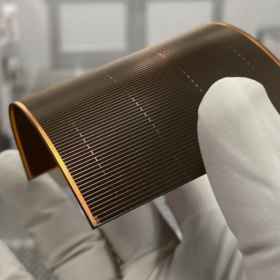
Ultra-thin solar cells self-repair damage from radiation in space
Arizona-based Solestial’s silicon-based solar cells exhibit a high level of resilience in space, according to third-party testing.

Indosol, Reliance win incentives for poly-to-module manufacturing
Eleven companies in India have emerged as the winners of the second round of the production-linked incentive scheme for high-efficiency solar modules. In particular, Indosol, Reliance, and First Solar have secured incentives for fully integrated production.

Trina Solar aims for 26% TOPCon solar cell efficiency by 2027
Zhang Yingbin, Trina Solar’s head of global product strategy, speaks to pv magazine about the path to a supply chain dominated by n-type TOPCon products. He says Trina Solar will reach 30 GW of TOPCon solar module capacity by the end of 2023.
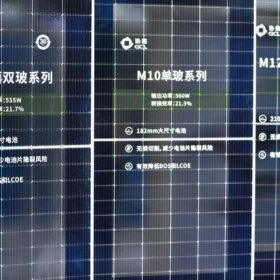
GCL starts building 12 GW solar module factory
GCL Integration expects to start operating a new 12 GW solar factory in October, bringing its total solar panel manufacturing capacity to 30 GW.

French startup unveils aluminum solar facade
C2F has developed a building-integrated PV (BIPV) facade made of aluminum that purportedly limits the impact of hot and cold weather, while also improving solar module performance.
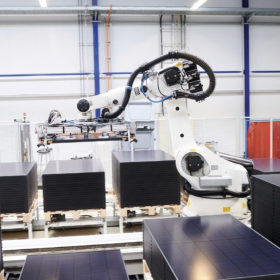
Germany launches feasibility study on PV manufacturing
Germany’s Federal Ministry for Economic Affairs and Climate Action says it will fund a study on the feasibility of quickly restoring a full PV supply chain in Europe. Three German companies are leading the study and are calling for participation from other industry stakeholders.

High-latitude tests show vertical rooftop PV yields 30% more energy
Norway’s Over Easy says its pilot vertical PV system in Oslo achieved remarkable performance throughout a snowy winter. In 2022, the vertical array generated 1,070 kWh per kilowatt installed, which the company says compares to around 800 kWh per kilowatt installed for a conventional rooftop array.
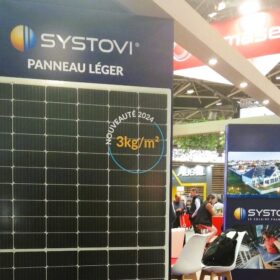
Systovi unveils ultra-lightweight solar panels
French module maker Systovi says its new solar panels weigh just 3 kg/m2. They are designed for flat tertiary rooftops that cannot support the weight of framed solar panels. It will begin selling the new modules in 2024.
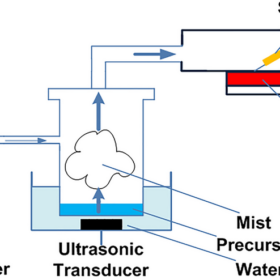
Indian researchers unveil new way to make metal-oxide layers for solar cells
Researchers at IIT Mandi have developed high-quality, uniform thin films of nickel oxide on the silicon substrate using an aerosol-assisted chemical vapor deposition technique, with nickel nitrate as the precursor material.
Weekend Read: Shingle all the way
While shingled cells have been around for a while, Tongwei’s adoption of the technology is notable as it is a manufacturer with considerable scale. If shingling can overcome some hurdles, it could prove a welcome solution as unshaded sites for PV become elusive in mature solar markets.
