New simulation platform lets energy operators train against realistic cyberattacks
Researchers at Germany’s Fraunhofer FKIE institute developed PowerRange, a virtual simulation platform that helps power grid operators safely test cybersecurity measures and respond to realistic cyberattacks. The platform supports both traditional and renewable grids, offering immersive training across IT, OT, and control systems while highlighting the importance of coordination, communication, and practical defense strategies.
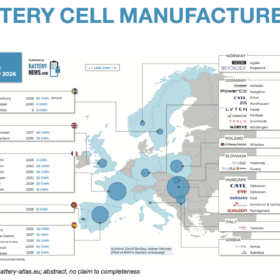
‘Battery Atlas 2026’ maps Europe’s cell, pack and battery manufacturers
The “Battery Atlas 2026” report shows consolidation in Europe’s battery market. More than 2,000 GWh of cell production capacity was announced in 2023, but the realistic forecast for early 2026 is around 1,190 GWh, including approximately 673 GWh led by Asian companies.
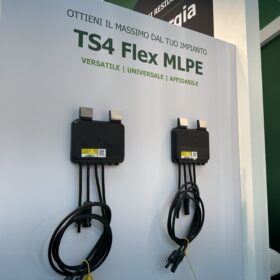
Tigo debuts 725 W optimizer for high-power solar modules
The new product has a maximum wattage of 725 W, a maximum current of 22 A, and a maximum efficiency of 99.6%.

Argentina tenders 700 MW of battery storage nationwide
Argentina’s Energy Secretariat has opened a national and international tender for battery energy storage systems (BESS) at grid-constrained nodes outside the Buenos Aires metropolitan area, targeting about $700 million in investment.
Osaki Electric signs EMS development pact with Kyocera, Taiwan Plastics
Osaki Electric says it has signed an agreement to formalize joint development of its AI-based energy management system (EMS), integrating solar generation and lithium iron phosphate (LFP) battery storage. It aims to sign a final contract by December 2026.
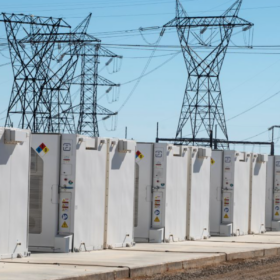
Germany’s battery sector calls for faster grid connections amid backlog
Germany’s large-scale battery industry is urging regulators and grid operators to speed up utility-scale connection approvals as applications outpace available grid capacity.

Fraunhofer IEE calls for ‘grid-forming readiness’ in distribution networks
Germany’s Fraunhofer Institute for Energy Economics and Energy System Technology IEE (Fraunhofer IEE) says in a new position paper that large-scale battery storage systems in medium-voltage grids should be technically prepared for future grid-forming operation, aiming to bridge the gap between current regulations and potential system stability requirements.

‘Garbage in, garbage out’ – solar industry debates reality of AI
Artificial intelligence can accelerate the planning, construction, and operation of photovoltaic systems, as shown at the recent Solar Quality Summit in Barcelona, Spain. But its effectiveness depends on data quality, as poor data, unclear responsibilities, and weak documentation can become major cost drivers.
South Korea to invest $223 million in next-generation distributed grid
The South Korean government has announced plans to invest KRW 321 billion ($222.6 million) in 2026 to upgrade regional distribution networks, deploy 85 energy storage systems, and expand solar integration while piloting microgrids and market reforms.
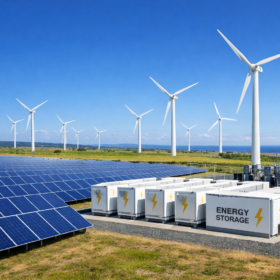
California batteries sustain near 24-hour solar run
On Feb. 1, California’s batteries bridged the solar gap with seamless precision. After discharging through the night until sunrise, they spent the daylight hours charging, then pivoted back to exporting power well past midnight – effectively sustaining the state on solar energy for a full 24-hour cycle.
