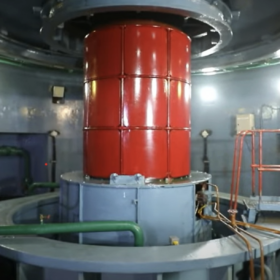
THDC commissions first 250 MW unit of 1 GW pumped hydro project
THDC India, a subsidiary of NTPC, has commissioned the first unit of 250 MW of a 1 GW variable-speed pumped storage hydropower project in India.

Testing 54 different combinations of solar-assisted heat pumps
Researchers in Germany have modeled dozens of indirect-expansion solar-assisted heat pump systems using photovoltaic-thermal panels for single-family homes in Munich, Berlin, and Hamburg. Simulations accounted for local weather, electricity use, and thermal demand.
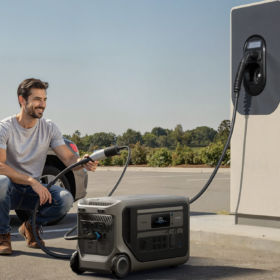
Anker Solix launches F3000 portable power station for home backup use
Anker Solix has unveiled the F3000, a 3-kWh portable power station designed for home backup and off-grid use in the United States and Canada, featuring fast charging, EV and generator compatibility, and scalable capacity up to 12.3 kWh.
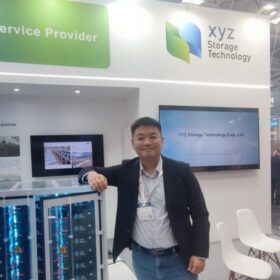
China’s XYZ launches 261 kWh immersion-cooled commercial battery
Immersion-cooled batteries submerge cells in a special liquid as a fire-protection measure, as XYZ executive Zha Qing explained to pv magazine at May’s Intersolar Europe trade show.
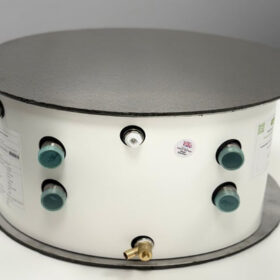
Hewer launches pre-assembled unit for heat pump retrofit, installation
The UK-based heating solutions provider has developed a pre-engineered and ready-to-install unit compatible with most of the residential heat pumps available in the market. It can be placed underneath a standard hot water cylinder and transfer heat from the pump via a plate exchanger to the central heating indirectly.
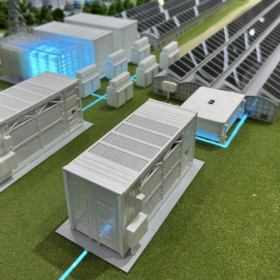
What developers are still getting wrong about battery risk
Insurers caution that key blind spots remain for energy storage developers going through the underwriting process.

Danish energy sector probes removes concerns about solar involvement
A Danish trade group has ruled out any link between suspicious components found in local energy equipment and recent reports of compromised solar inverters in the United States, narrowing the scope of an ongoing cybersecurity investigation.
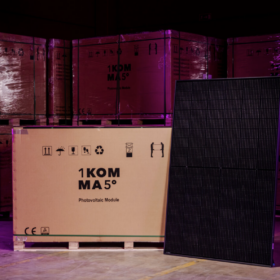
1Komma5° unveils VPP-ready solar, battery solution
German home energy and electrification company 1Komma5° has unveiled a residential energy ecosystem for the Australian market including solar panels, hybrid inverter, and the brand’s intelligent battery energy storage solution.
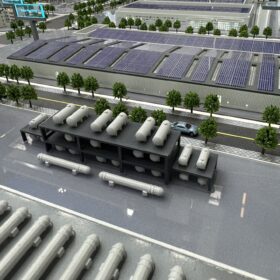
The Hydrogen Stream: HDF signs deal for 23 projects in Indonesia
HDF Energy (Hydrogène de France) has signed a tripartite agreement with Indonesia’s PLN and PT SMI to fund €2.3 billion ($2.6 billion) of hydrogen projects, while Thyssenkrupp Nucera says it will conduct a front-end engineering design [FEED] study for a 600 MW hydrogen electrolysis plant in Europe.

Enel inagurates 10 MWh second-life battery project at Italian airport
Enel’s Pioneer project is expected to last 10 to 15 years and has been integrated with Rome-Fiumicino airport’s Solar Farm, self-consumption PV system.
