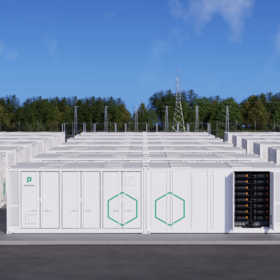
Powin introduces 6.26 MWh Pod Max containerized battery
Energy storage specialist Powin has launched Pod Max, a 6.26 MWh containerized lithium-ferro-phosphate (LFP) battery system that delivers 25% more energy density than its standard 5 MWh product. The liquid-cooled unit targets grid-scale applications.
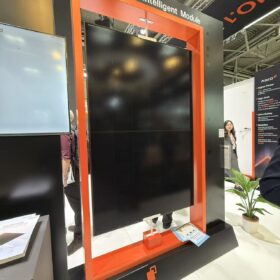
Aiko unveils back-contact solar module with ‘fully intelligent integration’
Chinese solar cell and module maker Aiko presented its new intelligent solar module series, Navigator, at this year’s Intersolar. Based on the company’s N-type, all-back-contact (ABC) technology, Navigator promises a 3% to 5% boost in annual energy yield and lower operating costs.

Australian state preps up to 20 GWh of battery and pumped hydro capacity
The government of New South Wales (NSW), Australia, is granting grid access to 10 renewable energy and energy storage sites in the new Central West Orana Renewable Energy Zone (REZ), while utility AGL has acquired pumped hydro energy storage (PHES) projects at the Glenbawn and Glennies Creek reservoirs.
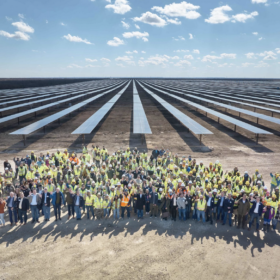
Watershed moment for Texas solar
As Texas suddenly finds itself a leader in both solar deployment and manufacturing, debate in the state legislature and US Congress could shape how much the Lone Star State once again will shape the nation’s energy trajectory.

EcoFlow expands HEMS to European market
EcoFlow’s Home Energy Management System (HEMS) and app is rolling out to the EU market, with AI functions to manage dynamic tariffs and weather for home solar+storage setups.
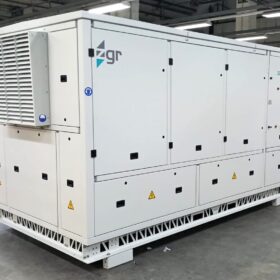
ZGR presents new range of 4500 kW central inverters and PCS at Intersolar
The entire range is prepared to operate under the future 2000 V regulations, allowing them to operate in various international markets, including Europe and Latin America.

Spain’s Smartbox presents 100% autonomous cleaning robot
It comes with two plug-and-play batteries, each with 4.5 hours of battery life, and is capable of cleaning up to 4,000 panels in 10 hours.

TCL SunPower launches back contact solar modules
The SunPower M Class product portfolio offers solar panels for the residential and commercial markets featuring the company’s latest back contact solar technology. The panels are expected to reach 25% efficiency for residential applications up to 500 W and 24.4% for commercial applications up to 660 W.

SolarPower Europe expels Huawei amid EU bribery probe
SolarPower Europe (SPE) has dropped Huawei as a member amid an EU corruption investigation, as the European Commission moves to sever ties with trade groups representing the Chinese tech giant. The decision marks the first such removal by the Brussels-based solar lobby.
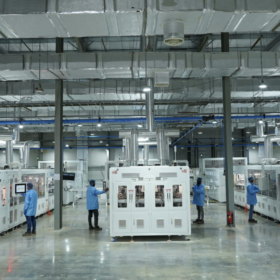
Indian solar manufacturing to hit 160 GW of modules, 120 GW of cells by 2030
India is expected to reach 160 GW of solar module capacity and 120 GW of cell capacity by 2030, up from 80 GW and 15 GW respectively in 2025, according to a new SolarPower Europe report, with input from the National Solar Energy Federation of India (NSEFI).
