
Australian utility plans 2 GW wind, solar and storage hub
Western Australian government-owned utility Synergy has submitted plans to build a 2 GW hybrid renewable energy hub including up to 500 MW of solar and 500 MW of battery energy storage capacity alongside what would be the biggest wind farm in the state.
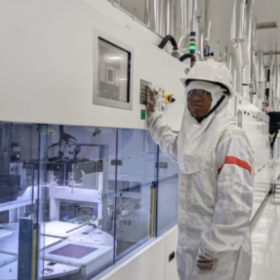
Tata Power’s 4.8 GW cell capacity added to India’s manufacturing list
The Indian Ministry of New and Renewable Energy (MNRE) added Tata Power’s 4,813 MW of solar cell capacity to its Approved List of Models and Manufacturers (ALMM), lifting total ALMM-enlisted capacity to 17,880 MW.

Chinese PV Industry Brief: New PV additions for August total only 7.3 GW
China installed 7.36 GW of new solar in August, bringing year-to-date capacity additions to 230.61 GW and total power generation capacity to 3.69 TW.
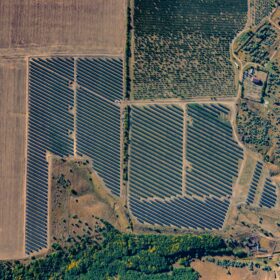
AI platform compiles data on Spain’s renewable energy projects
Orka Energía has unveiled an artificial intelligence platform that compiles and updates data on more than 4,000 renewable energy projects under development in Spain, including capacity, status, substations, and developers.

Namibia approves 3 GW of solar for hydrogen production
The Namibian government has granted an environmental approval for a 3 GW solar farm. The energy generated is set to be used for green hydrogen and green ammonia production.
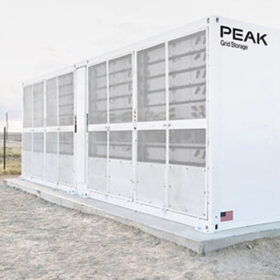
Peak Energy announces operation of first large-scale sodium ion battery in US
Denver-based Peak Energy claims its sodium-ion battery system offers the lowest operating cost of any energy storage technology on the market today.
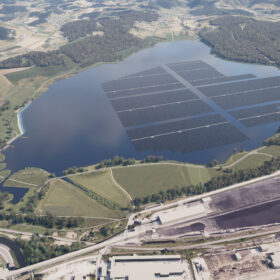
Slovenia plans 140 MW floating solar plant
Slovenian energy company HSE is developing a 140 MW floating solar project, with work currently underway on spatial planning activities. The solar plant is set to become Slovenia’s largest solar project and Europe’s largest floating solar array to date.

Czechia amends electricity generation licence threshold
An amendment to Czechia’s Energy Act has increased the limit for mandatory electricity generation licences from 50 kW to 100 kW. The change applies to solar installations that produce electricity for direct consumption.
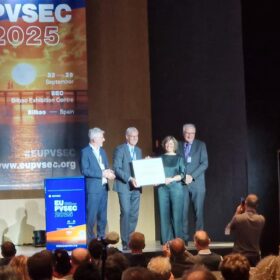
EU PVSEC 2025: Key takeaways
As the last of more than 1,100 scientific presentations wrap up today at the Bilbao Exhibition Center, pv magazine shares a few takeaways from an event that puts the latest solar technologies under the spotlight, and creates important connections between scientists and the solar industry.
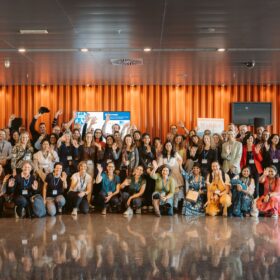
Inclusive leadership emerges as a key factor in accelerating the energy transition
This week, during EU PVSEC 2025, Women in Solar+ Europe (WiSEu), in collaboration with PVSEC, hosted the workshop “Leading with Inclusion: Exploring the Six Traits of Inclusive Leadership,” creating a dynamic forum for dialogue and co-creation. Drawing on Deloitte’s framework, six industry leaders and experts guided participants through the traits of commitment, courage, cognisance of bias, curiosity, cultural intelligence, and collaboration. What emerged was a collective recognition that inclusive leadership cannot be reduced to a single quality, but must be consciously nurtured through the interplay of all six traits.
