
Americans back solar tax credits as civic duty, carbon pricing tool
The American public has shown a strong willingness to fund solar and other renewable energy projects through tax credits, largely because voters trust directed infrastructure funding more than open-ended government revenue pools.
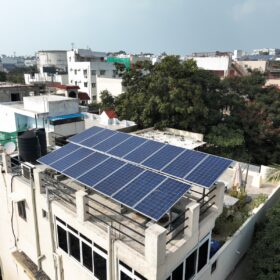
India rooftop solar installs hit 2.8 GW in H1, up 155% year on year
India deployed 2.8 GW of rooftop solar in January-June 2025, up 155% from 1.1 GW a year earlier, according to Mercom India.
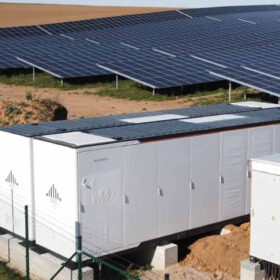
Argentina awards 667 MW in inaugural battery storage tender
In addition to awarding 30% more capacity than originally planned, Argentina’s first battery energy storage tender could allocate an additional 222 MW to bidders willing to match the highest awarded price.

Azerbaijan, Chinese PV firm plan export-focused solar factory in free zone
Azerbaijan and Chinese solar manufacturer Sichuan Sunsync have revealed plans to build a solar panel factory in the Alat Free Economic Zone, south of Baku.

Germany battery storage grid-connection requests exceed 500 GW
Germany’s grid connection requests for battery storage exceed 500 GW, a figure driven by a “first come, first served” approval system rather than viable projects, according to Regelleistung-Online.
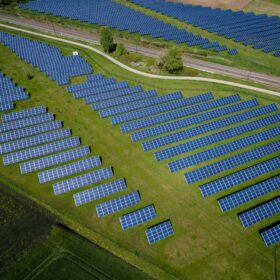
Italy issues special procedures for PV tenders over 1 MW with ‘non-Chinese’ components
The country aims to promote modules manufactured in the EU with new tender criteria. To this end, the government has introduced non-price-related tender criteria, making it one of the first EU countries to implement the NZIA guidelines.

ESMC calls for solar extension to carbon border adjustment mechanism
The European Solar Manufacturing Council (ESMC) is encouraging the European Commission to include solar modules, mounting systems and solar trackers in the carbon border adjustment mechanism (CBAM). It says the extension would support Europe’s solar market as Chinese manufacturers that export finished solar products to the EU are currently exempt from costs imposed under the policy.

Japan to launch platform linking aggregators with FIP operators
Japan plans to launch an online platform by September 2025 linking aggregators with feed-in premium (FIP) operators to support grid integration, streamline solar battery installations, and improve planning and forecasting for renewable projects.
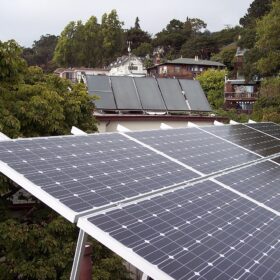
California asked to fine utilities $10 million for rooftop solar obstruction
A formal complaint was filed by the California Solar and Storage Association against electric utilities that are accused of routinely ignoring grid connection application timelines.
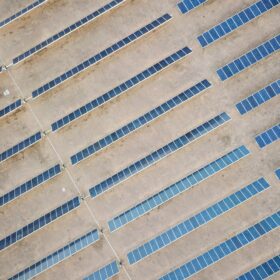
SolarPower Europe identifies Latin American investment opportunities
SolarPower Europe says Latin America’s solar sector is at a pivotal moment. Its latest report offers recommendations on how Argentina, Brazil, Colombia, Mexico and Peru can accelerate their solar growth trajectories and unlock investments.
