
Bangladesh scraps 5.68 GW of solar
Bangladesh has canceled 5.68 GW of planned solar capacity across 34 projects after developers failed to secure implementation, power purchase or land lease agreements, raising investor concerns over policy stability.
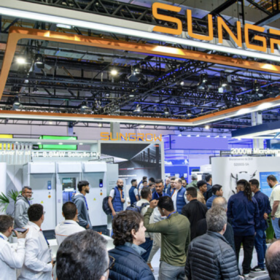
Sungrow’s Brazilian business heating up for batteries as solar demand cools
At Intersolar 2025, Sungrow’s Brazil country manager, Rafael Ribeiro, told pv magazine Brasil the company submitted more than 80 proposals to supply battery energy storage systems (BESS) between January and June alone, to projects interested in participating in the Leilão de Reserva de Capacidade na Forma de Potência (LRCAP) auction for battery storage.

Central-West Orana renewable zone draws community backlash in Australia
An Australian state parliamentary report says residents near the Central-West Orana renewable energy zone in New South Wales face negative social and economic impacts, despite a AUD 128 million ($83 million) community benefit program.

Americans back solar tax credits as civic duty, carbon pricing tool
The American public has shown a strong willingness to fund solar and other renewable energy projects through tax credits, largely because voters trust directed infrastructure funding more than open-ended government revenue pools.
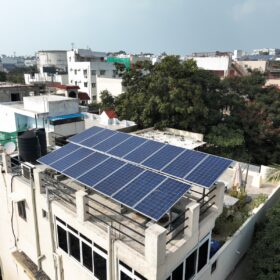
India rooftop solar installs hit 2.8 GW in H1, up 155% year on year
India deployed 2.8 GW of rooftop solar in January-June 2025, up 155% from 1.1 GW a year earlier, according to Mercom India.
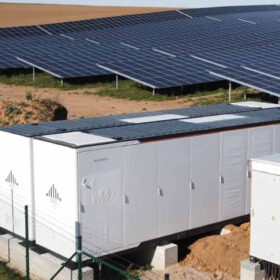
Argentina awards 667 MW in inaugural battery storage tender
In addition to awarding 30% more capacity than originally planned, Argentina’s first battery energy storage tender could allocate an additional 222 MW to bidders willing to match the highest awarded price.

Azerbaijan, Chinese PV firm plan export-focused solar factory in free zone
Azerbaijan and Chinese solar manufacturer Sichuan Sunsync have revealed plans to build a solar panel factory in the Alat Free Economic Zone, south of Baku.

Germany battery storage grid-connection requests exceed 500 GW
Germany’s grid connection requests for battery storage exceed 500 GW, a figure driven by a “first come, first served” approval system rather than viable projects, according to Regelleistung-Online.
Italy issues special procedures for PV tenders over 1 MW with ‘non-Chinese’ components
The country aims to promote modules manufactured in the EU with new tender criteria. To this end, the government has introduced non-price-related tender criteria, making it one of the first EU countries to implement the NZIA guidelines.

ESMC calls for solar extension to carbon border adjustment mechanism
The European Solar Manufacturing Council (ESMC) is encouraging the European Commission to include solar modules, mounting systems and solar trackers in the carbon border adjustment mechanism (CBAM). It says the extension would support Europe’s solar market as Chinese manufacturers that export finished solar products to the EU are currently exempt from costs imposed under the policy.
