
Italy launches second agrivoltaics tender
Italy has launched a second agrivoltaics tender, allocating €323 million ($348.4 million) in unused funds from the first round, which awarded 1.5 GW of capacity in December 2024. Developers have until June 30 to submit bids.

Assessing LCOE of rooftop PV in the Baltics
A study estimating the economic viability of rooftop solar in Estonia, Latvia and Lithuania forecasts the levelized cost of electricity (LCOE) for PV systems in the Baltic States at between €0.08 ($0.087) and €0.09/kWh by 2050 at a 6% discount rate.
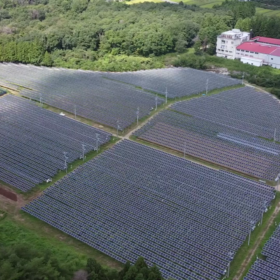
Japan’s energy R&D agency unveils solar strategy
Japan’s New Energy and Industrial Technology Development Organization (NEDO) has published a solar strategy to scale up deployment and drive next-generation technology, aiming for carbon neutrality by 2050.
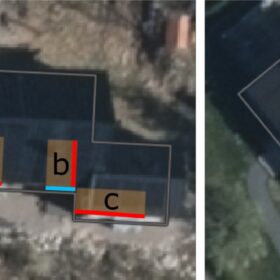
Using LiDAR data to improve modeling of PV system tilt, azimuth
Researchers in Sweden have developed a method to use LiDAR data to enable more precise tilt and azimuth modeling of solar PV and solar thermal capacity at a regional or substation level. The model could enable aggregators and grid operators to improve grid planning.

France releases new FIT rates for PV systems up to 500 kW
France’s new feed-in tariffs (FITs) for February to June 2025 range from €0.0839 ($0.0907)/kWh to €0.1295/kWh, depending on system size.

Mexico announces battery storage mandate for renewable energy plants
A month after India introduced an energy storage mandate for renewable energy plants and China scrapped its own, Mexico has stepped forward with an ambitious 30% capacity requirement, alongside plans to add a further 574 MW of batteries by 2028.

Key takeaways from SolarPower Europe Summit
More than 500 solar leaders met in Brussels this week for the SolarPower Europe Summit to discuss energy flexibility and EU policy. The EU energy chief said the Affordable Energy Action Plan could save €2.5 trillion ($2.7 trillion).

‘Flexible work arrangements, paid maternity leave, and childcare support can make a world of difference’
This week, Women in Solar Europe (WiSEu) gives voice to Elodie Colliard, director of Switzerland’s Green Giraffe. She explained she encountered her fair share of gender-based assumptions and biases. “While the disparities remain obvious and women are still a minority, I take comfort in seeing more of us join the industry, bringing our skills and perspectives to the table,” she states.
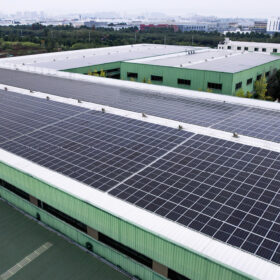
Digging into China’s solar capacity numbers
Amid a record amount of new solar capacity added in China in 2024, the share held by small-scale, “distributed” arrays fell to 38%, from 58% in 2022. Grid constraints, policy changes, and pricing adjustments have impacted home and business solar arrays, as Vincent Shaw reports, from Shanghai.
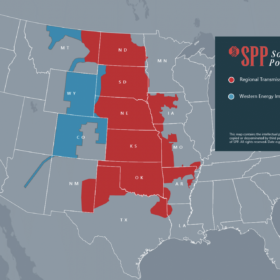
Southwest Power Pool can hit 90% renewables by 2050, says Brattle
The Southwest Power Pool (SPP) can reach 90% renewable energy while keeping US electricity rates stable, according to a study by Brattle Group.
