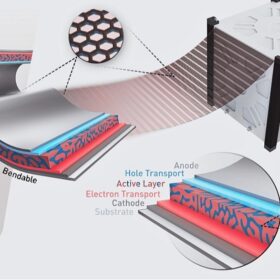
Turkish startup developing perovskite-organic tandem solar cell tech
Spacelis is developing lightweight, rollable space-grade perovskite-organic tandem solar PV technology targeting space and terrestrial portable energy applications.

Nature’s Generator introduces 10.5 kWh home backup battery
The MyGrid 10k home generator includes a 10 kW inverter and is rated for 6,000 cycles.
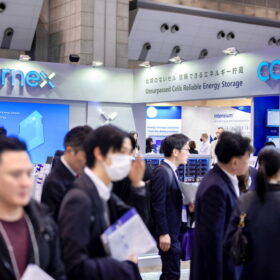
Cornex unveils 472 Ah LFP cell enabling more than 7 MWh in a 20-foot container
The Chinese battery maker has launched its next-gen lithium iron phosphate cell which can be integrated with both 1,500 V and 2,000 V platforms. It plans to establish mass production by June 30 with an annual manufacturing capacity layout of more than 80 GWh.
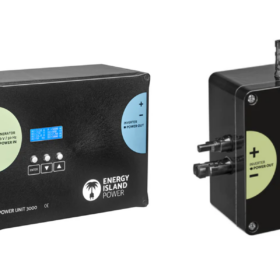
German startup launches bidirectional charging kit for EVs
Energy Island Power, a German startup, has developed a connection kit that allows electric vehicle owners to use their car’s power to support home energy needs by integrating with the solar inverter and the home grid.

Six-year test field shows agrivoltaics can be critical for rice productivity
Scientists in Japan have conducted a field experiment in rice plantations hosting agrivoltaics systems and have found that rice growth can be affected by reduced biomass and reduced panicle number. However, their analysis has also shown that gross return in lowland rice agrivoltaics can be 14 times higher than rice growth without PV.
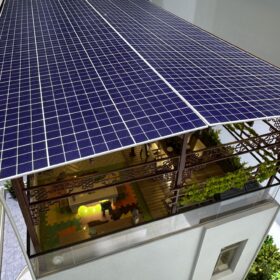
Using surplus solar power to pre-cool, pre-heat homes
Scientists in Australia have shown how pre-cooling and pre-heating could be implemented in Australian buildings with the support of excess solar power. Their analysis has demonstrated that summer has the highest potential for air conditioning demand reduction.

PVH launches foundation system for solar installations on complex terrain
PV Hardware (PVH) has released PVH Terra, a foundation system designed to improve solar plant installation on challenging terrain. The system aims to improve stability in expansive soils, frost-affected areas, and sites with poor geotechnical conditions while reducing costs and environmental impact.

Assessing LCOE of rooftop PV in the Baltics
A study estimating the economic viability of rooftop solar in Estonia, Latvia and Lithuania forecasts the levelized cost of electricity (LCOE) for PV systems in the Baltic States at between €0.08 ($0.087) and €0.09/kWh by 2050 at a 6% discount rate.
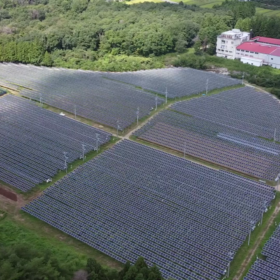
Japan’s energy R&D agency unveils solar strategy
Japan’s New Energy and Industrial Technology Development Organization (NEDO) has published a solar strategy to scale up deployment and drive next-generation technology, aiming for carbon neutrality by 2050.
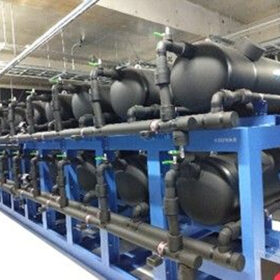
Japanese energy supplier to use green hydrogen for district heating, power
Akasaka Heating & Cooling Supply says it will use green hydrogen produced at an unspecified location in Japan to produce heat and electricity for its Akasaka 5-chome district heating system in central Tokyo.
