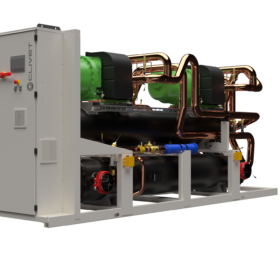
Clivet launches water-cooled multipurpose heat pump
The Italian manufacturer said the its new polyvalent reversible heat pump has a seasonal coefficient of performance of 4.44 to 4.59 and a seasonal energy efficiency ratio of 7.72 to 7.53. It can reportedly achieve a flow temperature of up to 55 C.

Semi-online tech for short-term solar irradiance forecast in PV plants
Scientists in Spain have created a semi-online technique to predict solar irradiance at different locations inside a photovoltaic plant. The proposed training approach is described as suitable for highly variable time series forecasting.
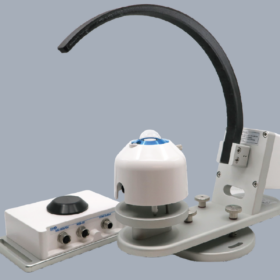
EKO unveils new solar monitoring solution
The latest irradiance sensor solution from Japan-based EKO Instruments provides continuous measurements in the field. Well-suited for bifacial PV systems, it supports the measurement of global horizontal irradiance, diffuse horizontal irradiance and direct normal irradiance, even in reflective and cloudy conditions.

The Hydrogen Stream: KGAL invests in 1 GW green hydrogen hub in Baltic Sea
The KGAL ESPF 6 Energy Transition Fund says it is investing in a 1,050 MW green hydrogen hub at Lubmin, a Baltic Sea port in Germany.

CATL unveils TENER Flex for easier transportation, deployment in Europe
China-based Contemporary Amperex Technology Co. (CATL) has launched a new 376 kW/752 kWh product expanding its TENER energy storage series in response to logistics and geospatial challenges facing energy storage products in Europe. The new solution integrates with both string and central inverters, meeting the needs of both large-scale commericial and industrial as well as distributed generation applications.

Trina Solar presents ‘fully recyclable’ 645 W PV module with 20.7% efficiency
Trina Solar claims it has developed the world’s first “fully recyclable” 645 W PV module with 20.7% efficiency. It made the panel with interlayer separation reagents, chemical etching technology, and wet chemical silver extraction tech.
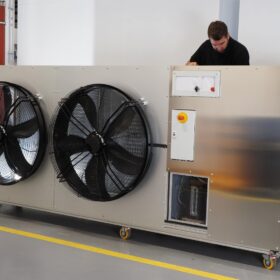
Fraunhofer ISE developing propane heat pumps for multi-family homes
Germany’s Fraunhofer Institute for Solar Energy Systems (Fraunhofer ISE) is developing “easy-to-use and reproducible” propane heat pumps to replace fossil fuel systems in multi-family homes, while exploring modernization options for various residential building types.

Sharp unveils 610 W TOPCon solar panel with 22.58% efficiency
Sharp’s new IEC61215- and IEC61730-certified solar panels have an operating temperature coefficient of -0.29% per C and a bifaciality factor of over 80%.
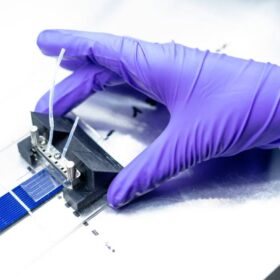
PV-based molecular thermal energy storage system achieves 14.9% solar utilization efficiency
An international research term investigated the feasibility of converting solar energy into chemical energy with the design of a hybrid device featuring a solar energy storage and cooling layer integrated with a silicon-based solar cell. Under testing, the device recorded a record energy storage efficiency and decreased the cell’s surface temperature by approximately 8 C under standard solar irradiation conditions.
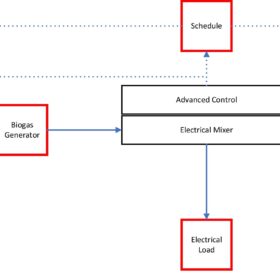
Offgrid hybrid PV-biogas system for residential applications
The system was conceived to respond to Lebanon’s energy crisis and help homeowners become independent from grid electricity. Biogas production is used when PV power generation is insufficient and machine learning techniques help the system predict solar energy production.
