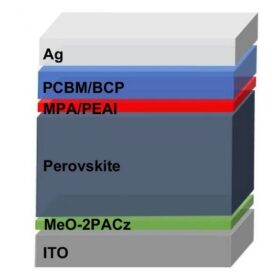
Inverted perovskite solar cell based on synergistic bimolecular interlayer achieves 25.53% efficiency
Developed by researchers in China, the inverted perovskite device purportedly achieves the smallest nonradiative recombination-induced open-circuit voltage loss reported to date. It uses a synergistic bimolecular interlayer to functionalize the perovskite interface.

Australian researchers eye redesigned panel as part of recycling plans
Researchers at the University of New South Wales (UNSW) plan to develop a redesigned PV module for easier recycling, with AUD 5 million ($3.4 million) in federal government funding to help transform Australia’s solar panel recycling industry.
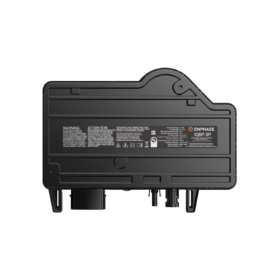
Enphase begins shipping US-made microinverters for commercial projects
Enphase says that it has started shipping US-made IQ8P-3P commercial microinverters, supporting up to 480 W of peak output power and compatible with solar modules up to 640 W.

EDF invests in Israeli robotic agrivoltaics startup
AgRE.tech, which is developing a robotic operating system for existing photovoltaic infrastructure, has raised $2 million from EDF and Zemach Regional Industries. The company says it will soon set up commercial fields.

TrendForce says 210 mm module shipments surpassed 260 GW in Q1
Market intelligence platform TrendForce says 210 mm n-type technology is “set to spearhead a new industrial revolution.” It expects 210mm modules to account for 78.29% of the large-format module market this year, increasing to 82.51% by 2027.
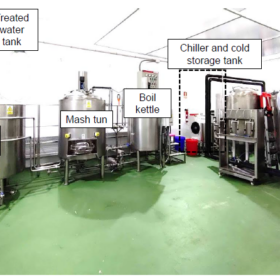
Solar for small-scale brewing
Researchers in Spain have investigated the potential of using photovoltaic (PV) or photovoltaic-thermal (PVT) systems in microbreweries and have found that PVT systems can cover more energy demand but have a longer payback time.

Smart window company sees buildings as renewable energy hubs
ClearVue Technologies, an Australian smart-window tech manufacturer, has secured a repeat order from the United States.

Using digital twin, roll-to-roll platform to design high-performance organic PV devices
An international team of researchers have demonstrated how to speed up the research and development of scalable, high-performing organic solar cells by using an automated, high-throughput platform. It relies on digital twin technology and roll-to-roll (R2R) printing in a closed-loop system.
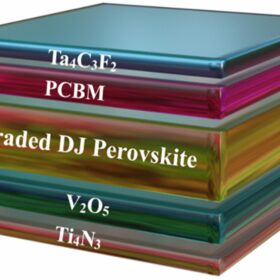
2D Dion-Jacobson perovskite solar cell based on MXene contacts achieves 17.47% efficiency
Scientists in India have combined 2D perovskite solar cell technology with MXenes materials to build a PV device with remarkable efficiency and open-circuit voltage. They claim the new cell architecture is key to helping charge carriers move smoothly through the cell layers and reduce recombination losses.

TBEA launches new 1,500 V string inverter
TBEA has developed a new 1,500 V string inverter with a maximum efficiency of 99.02%, maximum power point tracking (MPPT), a maximum input current of 65 A, and a maximum short circuit current of 115 A.
