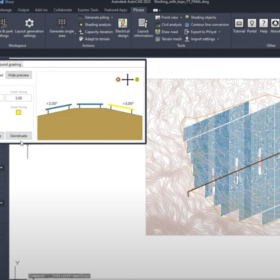
PVcase acquires Anderson Optimization
PVcase, a Lithuanian PV software company, has acquired Anderson Optimization and says the integration of the US-based firm’s software could allow it to slash design times from weeks to just 20 minutes.
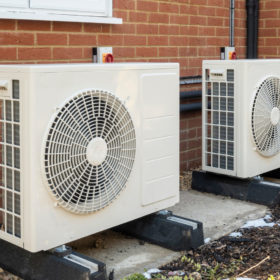
European organizations publish EU heat pump acceleration plan
More than 20 companies, governments, and nongovernmental organizations have presented EU Energy Commissioner Kadri Simson with a roadmap for the European heat pump sector, including recommended solutions to overcome barriers to growth.
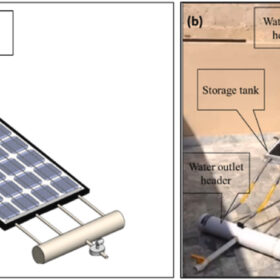
Photovoltaic-thermal solar panel based on water storage tank
A research group from Ireland developed a PVT system consisting of a 170 W photovoltaic panel connected to a water tank placed at the backside of the PV module itself. The PVT module is able to considerably reduce the temperature of the PV unit while producing hot water for residential use.
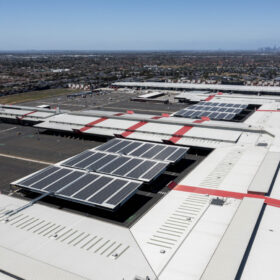
Melbourne switches on 2.4 MW solar carpark
The Melbourne Market Authority has switched on a 2.4 MW solar carpark at its facility in Melbourne, Australia. It is the first phase of a three-stage project that will culminate in a 10 MW rooftop system.

IBC solar cell based on ultrathin black silicon wafer achieves 16.4% efficiency
A Spanish-Finnish research team has fabricated an IBC solar cell with an ultrathin black silicon wafer with a thickness of 40 µm. The device is based on vanadium oxide and laser-processed phosphorus-doped silicon carbide stacks as hole and electron transport layers, respectively.
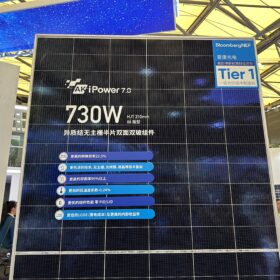
Akcome unveils new 730 W heterojunction solar modules
Chinese manufacturer Akcome has released a new line of heterojunction solar panels with a nominal power capacity ranging between 710 W and 730 W and a conversion efficiency of 22.80% to 23.50%.
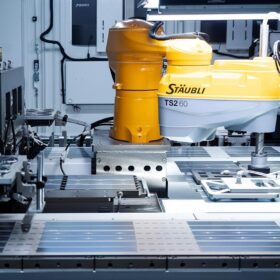
Chinese PV Industry Brief: TW Solar plans 20 GW module factory in Sichuan province
TW Solar announced it will invest around $1.48 billion in a new integrated solar module manufacturing facility in Chengdu City. Meanwhile, Jinkosolar began to buy new production equipment for its expansion plans from Wuxi Autowell.
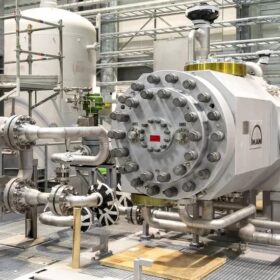
MAN Energy installs world’s largest seawater CO2 heat pump in Denmark
Germany’s MAN Energy Solutions has supplied two 50 MW seawater heat pumps for district heating at the port of Esbjerg, Denmark. They use CO2 as a refrigerant and will be powered by nearby wind farms. The project will start producing 350,000 MWh of heat per year in the fall.

Indian startup introduces 5 kWh storage system based on second-life EV battery
India’s Lohum has designed a 5 kWh energy storage system in collaboration with MG Motor India, as part of efforts to develop second-life solutions for used EV batteries.
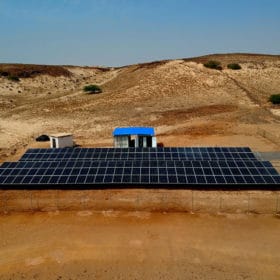
Bangladesh introduces fiscal breaks for solar-powered water desalination
Bangladesh has introduced tax exemptions to reduce water production costs and promote the use of solar power in 19 coastal districts. This initiative comes in response to grid electricity shortages caused by a decline in coal and fuel imports. The goal is to enhance reliance on solar-powered water desalination in these areas.
