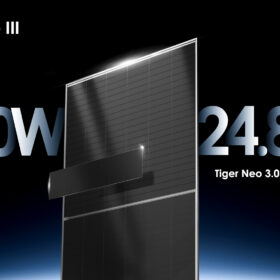
JinkoSolar launches 670 W TOPCon solar module with 24.8% efficiency
The Tiger Neo 3.0 panel features an 85% bifacility factor that translates into 553-570 W of rear side power output, according to the Chinese manufactuer. The new product is claimed to be the “world’s most powerful solar module.”

Fraunhofer ISE defining test procedure for grid-forming inverters
The evaluation process, developed in collaboration with four German transmission system operators, has been carried out on seven European companies whose inverters range from kW to MW in size.
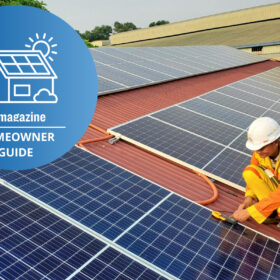
pv magazine Homeowner Guide: Understanding the solar installation process
pv magazine is compiling a guide to home solar installations, aimed at those who are interested in installing but are new to the market and want to make an informed decision. We have spoken to associations, installers and industry specialists in major solar markets across the globe to compile best practice guidance and advice that aims to be applicable to home solar installations anywhere in the world.

Korean startup developing perovskite-CIGS tandem solar technology for satellites
Flexell Space is planning to put its perovskite-copper indium gallium selenide (CIGS) tandem solar cell technology in-orbit later this year. It has also raised venture capital and signed several collaboration agreements, including a technology transfer with the Korea Institute of Energy Research.

How to size PV systems and batteries
Experts from Fonte Solar, Huawei, and Greener have exchanged solar-plus-storage tips, insights, and case studies at the invitation of pv magazine. In a panel at Intersolar South America 2025, they highlighted the need to understand consumption profiles and customer needs, as well as the technology’s limitations and potential.

Weathered PV backsheets have 46% faster flame spread than unweathered counterparts
Researchers in Singapore have accelerated the weathering of PV backsheets and investigated their flame spread behavior at different intervals. After 6 weeks, they found that weathered PV backsheets show 46% faster flame spread than unwearthered ones. They have also highlighted that current safety standards fail to account for long-term degradation.

All back-contact perovskite solar cell designs at a glance
Scientists from Japan, Saudi Arabia and the United States have investigated existing back-contact perovskite solar cell architectures and have proposed a strategy to help reach commercial production.
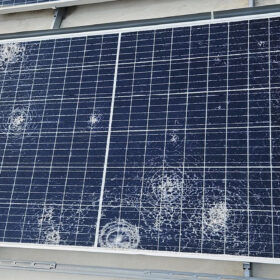
New hail test aims to more accurately measure solar panel resilience
A new test curve for determining solar panels’ breaking point from hail uses a broader spectrum of impact energies and testing products.
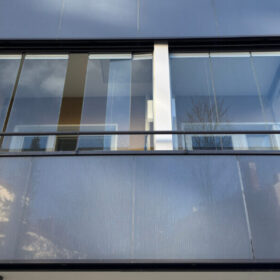
Finnish glass maker offers PV systems integrated into glass balcony parapets
Finland-based Lumon has integrated balcony PV modules into a glass parapet, maintaining the facade’s appearance without visible technical components. The first project using the product has already been completed in Finland.

Freen launches scalable sodium-ion battery storage
The Estonian home and commercial storage systems come in low- and high-voltage models. The high-voltage option can scale to ten modules, for 100.8 kWh, and a six-module, low-voltage version to 45 kWh.
