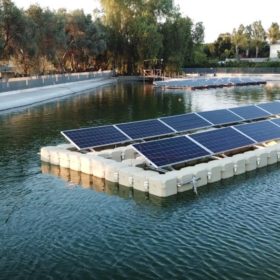
Enel to combine floating PV, hydropower
The Italian utility is testing several technologies at a floating PV array in Sicily. It wants to select the most promising ones for future large-scale projects in the reservoirs of its hydropower plants throughout the world.
Oil India seeks installers for at least 100 MW of solar
Oil India, a state-run oil producer, has issued a call for bids to build at least 100 MW of solar capacity at any location in India on a turnkey basis.
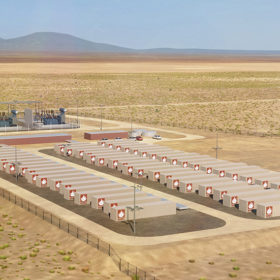
South Australia awards 10-year PPA to 260 MW of PV, 100 MW battery
Construction of the state’s biggest PV array and its fifth “big battery” will create 810 jobs. The state government forecasts US$8.96 million of energy savings over the course of the decade-long contract.
The weekend read: Something truly new
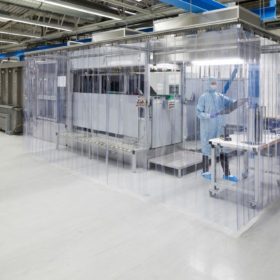
You can try to succeed by making a better version of your competitors’ product, or you can try to do something completely new. NexWafe has chosen the second path. It is developing plans to manufacture wafers for high-efficiency solar cells in Bitterfeld, Germany, that are produced more sustainably and at lower cost than any other products available today.
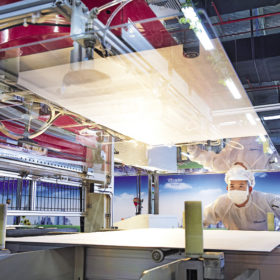
Chinese PV Industry Brief: PV additions hit 18.7 GW in January-September period
Just as the nation posted strong deployment figures, two major module manufacturers reported solid earnings for the nine months to the end of September.
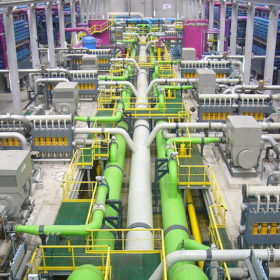
PV powered desalination is “the most competitive design”
Scientists in France conducted an analysis on the competitiveness of water desalination, taking a large scale project planned for Morocco as a case study. The research concludes that PV without storage is the cheapest option to power desalinators, and will likely remain so until at least 2030.
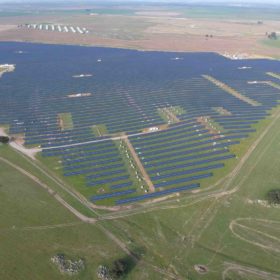
Unsubsidized PV plant goes online in Portugal
Hyperion Renewables continues to expand its PV plant portfolio and is now working on green hydrogen production and distributed generation projects.

Switzerland set to add 400 MW of PV in 2020
Applications for solar rebates have almost doubled thus far this year, said Swissolar, which sees year-on-year growth in all rooftop PV segments.
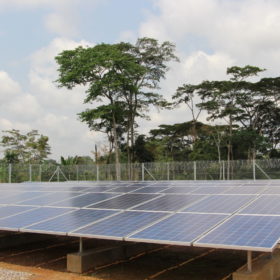
Thermodynamics-inspired model for microgrid feasibility
Researchers in the U.S. have deployed a phase model, inspired by thermodynamics, to total system costs and technology choices of power grids. Doing so allowed the group to make assumptions for when all renewables powered microgrids become the most economically viable option.
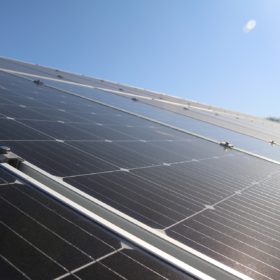
NREL’s performance ratio method applied to thousands of PV systems
Researchers have analyzed the monthly performance ratio of 8000 PV installations distributed across the United Kingdom by using the calculation model of the U.S. National Renewable Energy Laboratory. They measured, in particular, thermal impact on the performance ratio (PR) and found that Spring and Summer seasons have higher monthly PR compared to Autumn and Winter.
