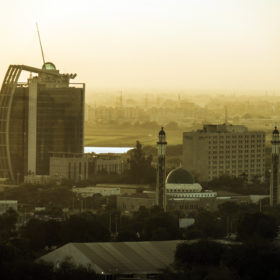
Sudan wants to contract 500 MW of solar power
According to the country’s Ministry of Energy, an unspecified UAE solar company has committed to building several large scale PV plants across the country. These new projects would be granted a 20-year PPA and would be Sudan’s first solar parks.
Statkraft to buy Solarcentury in latest solar-hydropower tie-up
The Norwegian hydropower business wants to pay €131 million for the London-based clean energy developer which claims to have brought to life 1.2 GWp of project capacity in seven countries since 2013.

Africa celebrates continent’s exceptional solar achievers at inaugural AFSIA Solar Awards
Africa celebrated its exceptional solar achievers in a grand ceremony streamed online on October 29, 2020. A total of 15 winners in various individual and institutional categories were unveiled at the Inaugural Africa Solar Industry Association (AFSIA) Solar Awards ceremony. The landmark event was organized in partnership with the Africa Energy Forum (AEF).
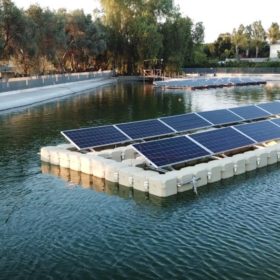
Enel to combine floating PV, hydropower
The Italian utility is testing several technologies at a floating PV array in Sicily. It wants to select the most promising ones for future large-scale projects in the reservoirs of its hydropower plants throughout the world.
Oil India seeks installers for at least 100 MW of solar
Oil India, a state-run oil producer, has issued a call for bids to build at least 100 MW of solar capacity at any location in India on a turnkey basis.
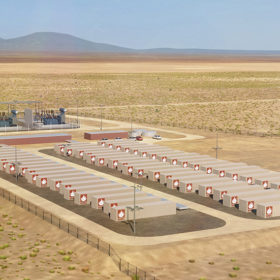
South Australia awards 10-year PPA to 260 MW of PV, 100 MW battery
Construction of the state’s biggest PV array and its fifth “big battery” will create 810 jobs. The state government forecasts US$8.96 million of energy savings over the course of the decade-long contract.
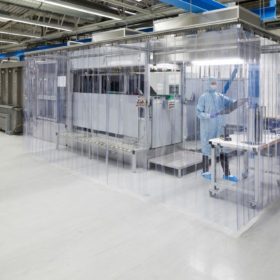
The weekend read: Something truly new
You can try to succeed by making a better version of your competitors’ product, or you can try to do something completely new. NexWafe has chosen the second path. It is developing plans to manufacture wafers for high-efficiency solar cells in Bitterfeld, Germany, that are produced more sustainably and at lower cost than any other products available today.
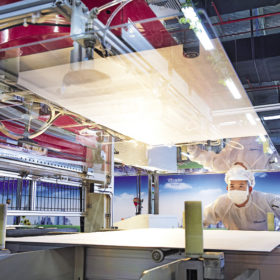
Chinese PV Industry Brief: PV additions hit 18.7 GW in January-September period
Just as the nation posted strong deployment figures, two major module manufacturers reported solid earnings for the nine months to the end of September.
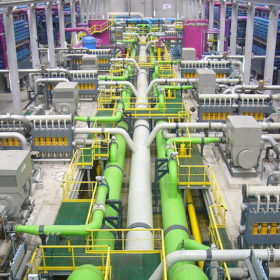
PV powered desalination is “the most competitive design”
Scientists in France conducted an analysis on the competitiveness of water desalination, taking a large scale project planned for Morocco as a case study. The research concludes that PV without storage is the cheapest option to power desalinators, and will likely remain so until at least 2030.
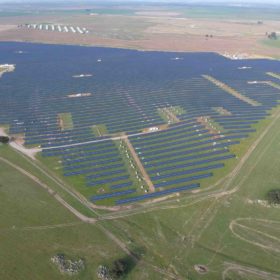
Unsubsidized PV plant goes online in Portugal
Hyperion Renewables continues to expand its PV plant portfolio and is now working on green hydrogen production and distributed generation projects.
