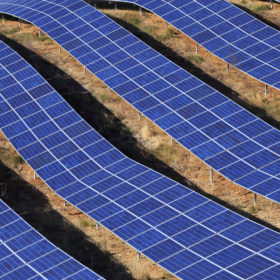
Adani becomes world’s largest solar developer
The world’s sixth-largest solar player in 2019 has risen to the top spot by securing a contract from Solar Energy Corp. of India to develop 8 GW of PV capacity.
Utility-scale projects driving US solar growth
Large solar projects are surging in the United States. We’ve gathered up the latest news in big solar, with Indiana set to double its solar capacity, and Texas galloping along.
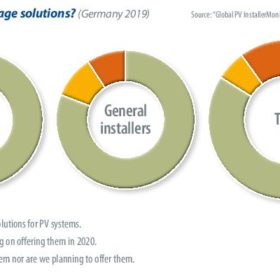
The weekend read: European storage – Start of a new growth phase?
In general, the tale of photovoltaics in Europe has been a success story, albeit one not completely devoid of obstacles and hurdles. The idea of producing clean energy was pushed by tailwinds when CO2 emissions skyrocketed and the catastrophic Fukushima incident once more made us recognize the hazards of nuclear energy. However, the PV industry still has a long way to go to reach its full potential.

France devotes €30 billion to energy transition
The French government will use around €9 billion of its new €30 billion global investment package to support the development of a hydrogen economy, as part of the country’s Covid-19 recovery plan.
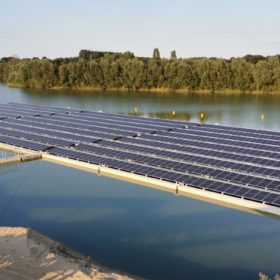
Floating PV powering sieving machines, suction excavators at German quarry
Rheinland Solar has built a 750 kW floating solar plant to power several sieving machines and suction excavators at a quarry in Germany. On weekends, the excess electricity is sold to the grid at market prices.
IB Vogt secures $135 million from EIG Global Energy Partners
The German developer will use the funds to finance its 16 GW global solar pipeline.
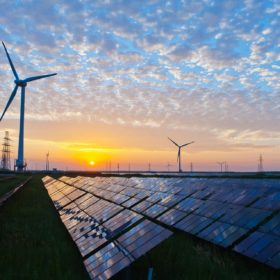
Chinese PV Industry Brief: 350 MW wind-solar project, 200 MW of floating PV
Longyuan has revealed plans to build a 350 MW hybrid wind-solar plant in Shandong province. China Resources, meanwhile, said it will build 200 MW of floating solar in Hubei province.
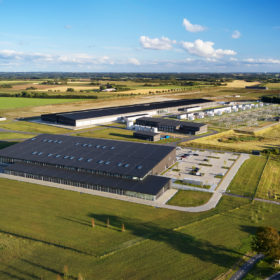
Apple data center in Denmark powered by 50 MW of solar
European Energy has built a solar array and is now constructing a wind farm to provide Apple’s data center in Denmark with 100% renewable energy. The PV project, which features bifacial panels, is the country’s largest unsubsidized PV installation in operation.
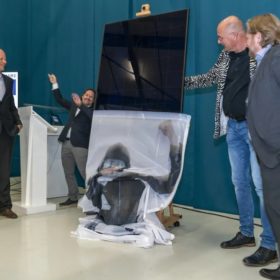
Zebra IBC cell with 24% efficiency moves to large-scale production
Netherlands based manufacturer Energyra this week introduced a new back contact module, which it has developed in partnership with Dutch research institute TNO and Germany’s ISC Konstanz. A prototype module was unveiled yesterday in a small presentation at Energyra’s factory in Zaandam, Netherlands. The company is targeting large-scale manufacturing by the end of 2020.
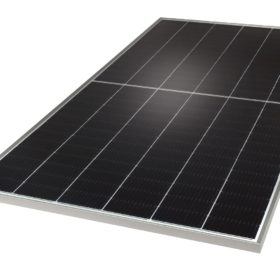
Hanwha Q Cells to offer its most powerful panels in Europe
The South Korean PV manufacturers is bringing its three most powerful solar panels to Europe. All of them are based on its Q.antum Duo Z tech, which reduces the gaps between cells and drives up module efficiency by 4% in relative terms.
