
FuturaSun, TNO sign bifacial solar cell collaboration
FuturaSun and The Netherlands Organization for Applied Scientific Research will work together on advancing the design of bifacial n-type silicon solar cells, with the technology to be integrated into FuturaSun’s Silk Nova solar modules.

Spain’s Smartbox presents 100% autonomous cleaning robot
It comes with two plug-and-play batteries, each with 4.5 hours of battery life, and is capable of cleaning up to 4,000 panels in 10 hours.

TCL SunPower launches back contact solar modules
The SunPower M Class product portfolio offers solar panels for the residential and commercial markets featuring the company’s latest back contact solar technology. The panels are expected to reach 25% efficiency for residential applications up to 500 W and 24.4% for commercial applications up to 660 W.

SolarPower Europe expels Huawei amid EU bribery probe
SolarPower Europe (SPE) has dropped Huawei as a member amid an EU corruption investigation, as the European Commission moves to sever ties with trade groups representing the Chinese tech giant. The decision marks the first such removal by the Brussels-based solar lobby.
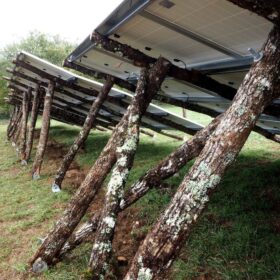
French commune harnesses local solar power
The new 300 kWp power plant in the Haute-Loire commune of Rosières, designed with a mounting system made from local wood, is part of a collective self-consumption operation that sells surplus energy to green supplier Energie d’ici in the local currency, the LIEN.

The Hydrogen Stream: Sungrow starts world’s largest dual-tech green H2 plant
Sungrow Hydrogen has started production at China’s largest dual-tech green hydrogen project combining PEM and alkaline electrolyzers, while HNO International has partnered with Zhuhai Topower to pilot its modular hydrogen platform in China.
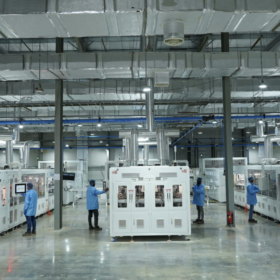
Indian solar manufacturing to hit 160 GW of modules, 120 GW of cells by 2030
India is expected to reach 160 GW of solar module capacity and 120 GW of cell capacity by 2030, up from 80 GW and 15 GW respectively in 2025, according to a new SolarPower Europe report, with input from the National Solar Energy Federation of India (NSEFI).
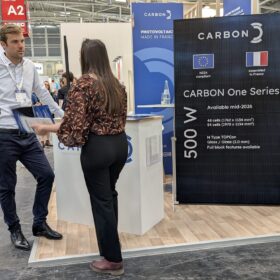
Carbon unveils first PV panels
At the Intersolar trade show in Munich, the startup Carbon is showcasing its first PV modules, which will be available from mid-2026 in power ranges from 445 Wp to 505 Wp. A third module, with power outputs from 615 Wp to 625 Wp, will later complete the Carbon One series.

Dutch-made gel lead-acid battery doubles lifespan, expands to C&I sizing
The Qurmit battery gel lead-acid battery has expanded to the commercial and industrial (C&I) sector with a larger capacity battery, and new technology has improved the lifespan.
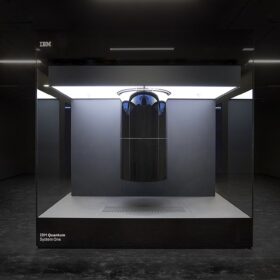
Quantum-based energy management method for PV-powered buildings
Scientists from Cornell University combined quantum computing with model predictive control to manage the energy of two PV-equipped university buildings. Compared to deterministic approaches, the quantum strategy achieved a 6.8% improvement in energy efficiency and an annual reduction of 41.2% in carbon emissions.
