
Could global warming improve heat pump efficiency in Alpine regions?
Researchers in Italy analyzed air-to-water heat pump performance in Alpine regions, focusing on how start-up and defrost cycles affect efficiency under current and future climate conditions. Their simulations show that while warmer temperatures slightly reduce defrosting losses and modestly improve efficiency, start-up cycling losses remain significant and continue to limit overall performance gains.

Solar rebound effect could raise Europe’s electricity demand 5% by 2050
Research from Germany’s FernUniversität Hagen finds the solar rebound effect, caused by households increasing their total electricity consumption after installing a solar system, is currently a blind stop in Europe’s energy system planning and abatement scenarios.

Cyber threats for PV: What are cloud platform and software-as-a-service exploitation attacks and how do they work
Cloud and SaaS platforms are now central to PV plant operations, but their centralization creates a high-impact cybersecurity risk where a single compromise can expose or disrupt entire fleets of installations. Attackers exploit weaknesses like stolen credentials, insecure APIs, multi-tenant flaws, and platform vulnerabilities, making strong identity controls, secure APIs, and continuous monitoring essential defenses.
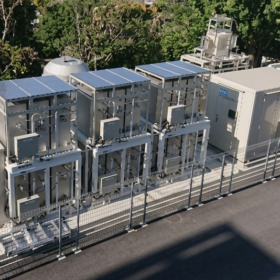
Low-pressure hydrogen bridges seasonal gaps in solar-powered Japanese building
Taisei Corporation has demonstrated that a building can operate entirely on solar power by combining PV generation with a hybrid storage system integrating batteries and low-pressure hydrogen at a test facility in Yokohama. An EMS-enabled setup using lithium-ion batteries and PEM electrolysis balanced short- and long-term energy supply and demand, enabling year-round renewable operation, according to the company.

TBEA launches 500 kW string inverter
The new inverter is designed around standardized 5 MW and 5.5 MW PV sub-arrays with the aim to reduce balance-of-system costs. It features a maximum efficiency of 99.0% and a high-voltage architecture of up to 1,600 Vdc and 1,000 Vac.

JinkoSolar debuts rooftop PV module weighing 7 kg/m2
The Chinese manufacturer said its lightweight Light Diamond TOPCon module delivers 560 W at 24.94% efficiency.

Community-scale solar offers $6.5 billion in savings, bypassing California gridlocks
Localized distribution-level projects can cut out-of-state energy imports by 13% while providing a faster alternative to delayed transmission-scale infrastructure, said a report by Pathfinder Communications.
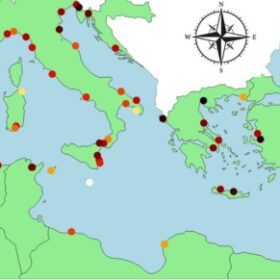
The Hydrogen Stream: Levelized cost of hydrogen at Mediterranean ports can be as low as €2.5/kg for hybrid systems
A study from the University of Naples Federico II finds hydrogen production at Mediterranean ports could cost €5.7–8.6/kg using only renewables and €2.5–13/kg in hybrid systems, with solar emerging as the most reliable resource and wind outperforming it in select locations. Alongside these findings, major industry developments include new hydrogen and e-fuel projects, advanced electrolyser technologies, and EU-backed infrastructure expansion supporting large-scale decarbonization.

‘I approach inclusion from a perspective of fairness and performance’
This week Women in Solar+ Europe gives voice to Carla Vico, CEO of France’s Green Solver. She says building an inclusive culture means valuing people for their work, accountability, and commitment, rather than their gender or background. “I do not believe in positive discrimination; I believe in creating equal opportunities and making merit-based decisions,” she states.

Will we finally buy European PV modules?
In a new monthly column for pv magazine, the Becquerel Institute explains why Europe’s solar manufacturing outlook is shifting from decline to cautious opportunity, driven by rising energy uncertainty and new regulations like the Net-Zero Industry Act that create fragmented, nationally defined markets with partial protection for domestic producers. While demand and policy support are strong, complexity, uneven implementation, and competition risks mean success will depend on how quickly and strategically industry players navigate this narrow window.
