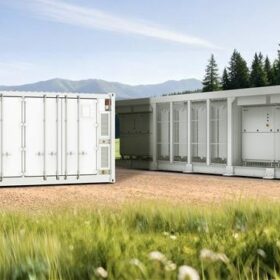
Trina Storage launches AC-coupled battery for utility-scale applications
Offered primarily as a 10 MW unit, the new product is also available in a 5.5 MW version for customers with specific requirements.

‘I’ve seen women promoted while pregnant, and others leading teams while working part-time’
This week Women in Solar+ Europe gives voice to Marion Bourdais-Massenet, Country Manager France at Viridi Energies Renouvelables. She says true inclusion comes from daily practice, allyship, and self-reflective leadership, encouraging young women to pursue their potential and contribute confidently to the energy transition.

Atlantic Storm Claudia cuts solar irradiance across Western Europe
In a new weekly update for pv magazine, Solcast, a DNV company, reports that Storm Claudia significantly reduced daily irradiance across the British Isles and the Iberian Peninsula, limiting solar generation.
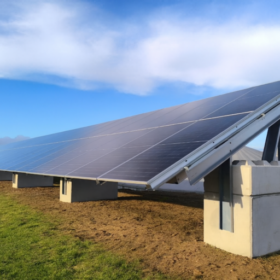
French startup offers modular, demountable ground-mounted solar systems
Enowatt says its modular, demountable photovoltaic structures allow companies to deploy solar capacity on existing sites without major building reinforcement, using ballasted units that install directly on asphalt.

Rescue bid for German solar glass maker GMB fails
The solar glass manufacturer started insolvency proceedings in July. An investor’s bid has now failed, leaving over 200 employees facing layoffs.

Spain’s Sumcab launches new cables for PV installations
Spanish manufacturer Sumcab says its new ToughGround and Overground cables are designed for underground and overhead photovoltaic systems throughout the world, offering durability, rapid installation, and a 30-year lifespan.

China moves to curb irrational competion in battery energy storage industry
The Chinese Ministry said it will take swift action to rein in aggressive low‑price competition that threatens to destabilize businesses and impede sustainable industry growth.
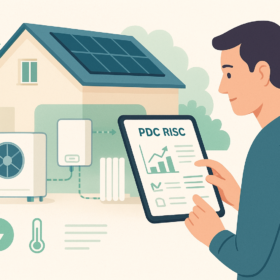
Open-access online tool helps homeowners replace gas boilers with PV-driven heat pumps
Italian research agency Enea has created a web tool that assesses the feasibility of replacing residential gas boilers with heat pumps by providing an estimate of the potential energy and economic savings. The app also provides information on the technical specifications of the photovoltaic system necessary to meet the heat pump’s electricity demand.

Austria deploys 1 GW of PV in January-September period
Austria added 1,036 MW of new solar capacity between January and September 2025, down from 1,419 MW over the same period in 2024, as political uncertainty, delayed legislation, and weakening residential demand strain the solar sector.
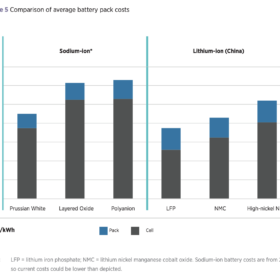
Sodium-ion battery cell cost could drop to $40/kWh, says IRENA
A report from the International Renewable Energy Agency (IRENA) notes that while it is still uncertain whether sodium-ion batteries will become a disruptive alternative to lithium-ion technology, they could offer significant cost-saving opportunities in applications such as electric vehicles and large-scale energy storage.
