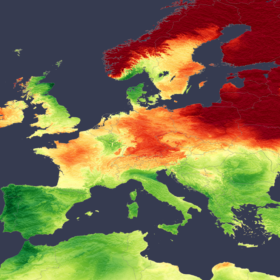
Storm train hits Western Europe PV as East clears under cold
In a new weekly update for pv magazine, Solcast, a DNV company, reports that January 2026 saw Europe’s coldest month since 2010, with Eastern Europe and Scandinavia enjoying above-average solar irradiance under stable, dry air, while the UK, Spain, and Portugal faced record cloudiness and rainfall that sharply reduced PV output.

China wafer prices fall for fourth week as discounting deepens under inventory pressure
In a new weekly update for pv magazine, OPIS, a Dow Jones company, provides a quick look at the main price trends in the global PV industry.

Sunoyster offers lightweight 440 W glass-covered TOPCon PV panel
Germany-based solar tracker developer Sunoyster Systems has developed a 440 W lightweight solar panel with a tempered glass cover for low-load commercial and industrial roofs.
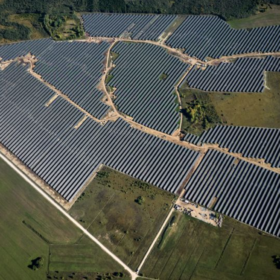
Estonia advances 1.1 GWh heat storage, 250 MWh BESS and 800 MWh battery park
Estonia has delivered its largest heat storage facility, begun construction on its largest solar-plus-storage hybrid project, and is preparing to break ground on an 800 MWh battery park in Valga County, set to become the largest in the Baltics.

NexWafe, Talon PV sign 7 GW solar wafer supply agreement
Under the terms of the deal, Germany’s NexWafe will supply its ultrathin solar wafers to Talon PV’s planned 4.8 GW TOPCon solar cell manufacturing plant in Texas. Initial qualification work will take place at a pilot production line at Fraunhofer ISE’s Photovoltaic Technology Evaluation Center.
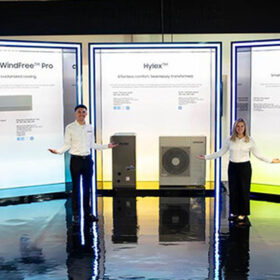
Samsung HVAC unveils inverter-driven residential heat pumps for cold climates
The US-based heating solutions provider said its Hylex inverter-driven heat pump offers 2–5 ton capacity, high efficiency, Wi-Fi control, and reliable cold-climate performance down to –25 C.
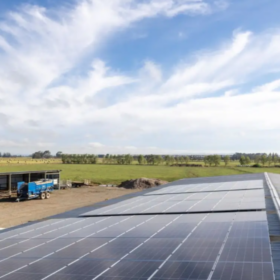
New Zealand selects 32 farms for solar and battery trial
New Zealand’s Energy Efficiency and Conservation Authority (EECA) has selected 32 agricultural businesses for its Solar on Farms program to test solar and battery systems across key sectors.
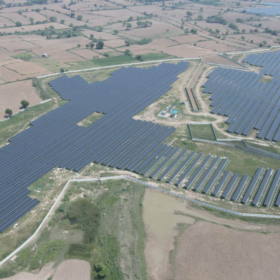
India adds 7.8 GW of open-access solar in 2025
India installed 7.8 GW of open-access (off-site C&I) solar in 2025, pushing cumulative capacity past 30 GW by year-end, according to Mercom India.
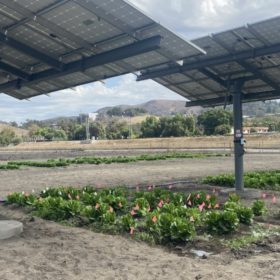
Agrivoltaics for regenerative agriculture
U.S. researchers are testing regenerative agrivoltaics at a farm in Southern California, combining solar panels with soil-restoring practices like composting, cover cropping, and no-till farming to enhance crop yields, soil health, and water-use efficiency. The pilot evaluates technical, ecological, and economic viability while exploring how this land-sharing approach can optimize food and energy production, reduce irrigation needs, and inform larger-scale deployment and policy frameworks.

South Africa adds 1.6 GW of solar in 2025
South Africa’s cumulative solar capacity likely exceeded 10 GW by the end of last year, according to analysis from the South African Photovoltaic Industry Association.
