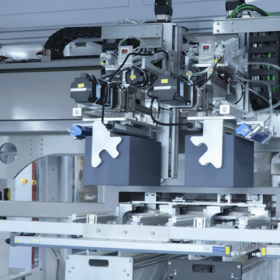
India’s Emmvee Energy signs 4.5 GWp TOPCon solar cell supply agreement
Emmvee Energy has signed a long-term supply agreement with a domestic buyer to deliver 4.5 GWp of tunnel oxide passivated contact (TOPCon) solar cells.
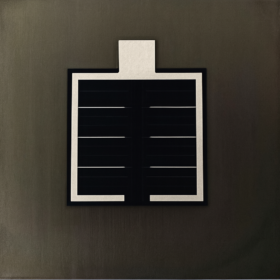
Perovskite-silicon tandem solar cell with steric complementary design achieves 32.3% efficiency
Researchers in China developed a monolithic perovskite-silicon tandem solar cell using a steric-complementary interface design, achieving a certified efficiency of 32.12% and enhanced long-term stability. This strategy optimizes molecular fit in the perovskite lattice, improving both charge transport and device longevity.
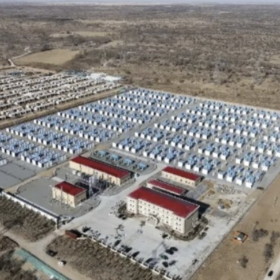
China powers up nation’s largest standalone battery storage project
A 500 MW/2,000 MWh lithium iron phosphate battery energy storage system has entered commercial operation in Tongliao, Inner Mongolia, after five months of construction, with total investment of CNY 1.5 billion ($212.2 million) and designed for peak shaving and renewable integration.

pv magazine Awards 2025 winners revealed
Excellence was on display across all eight categories in the pv magazine Awards 2025 with plenty of innovation in both established and new market segments. From world-firsts to second-life solutions, this year’s winners brought cutting edge solutions to challenges facing solar and storage. The time has come to reveal the winners and highly commended finalists…
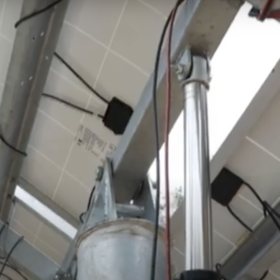
India installs 45,911 solar water pumps in Maharashtra
Maharashtra State Electricity Distribution Co. Ltd. (MSEDCL) reports the installation of 45,911 solar water pumps in one month under the Magel Tyala Solar Pump initiative in Maharashtra, India, verified through a multi-stage audit process.
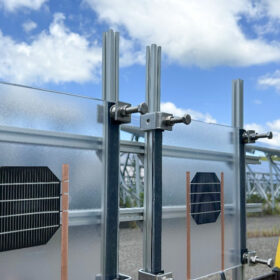
Perovskite solar testing field commissioned in Japan
Kanazawa University has begun long-term outdoor testing of tandem perovskite solar cells in collaboration with Toshiba. The research project aligns with Japan’s broader push to scale perovskite PV technologies toward large deployment by 2040.

Japan’s 26th solar auction concludes with average final price of $0.046/kWh
Japan has allocated 75.3 MW of PV capacity in its latest procurement exercise. The lowest price in the auction was JPY 4.97 ($0.032) /kWh.
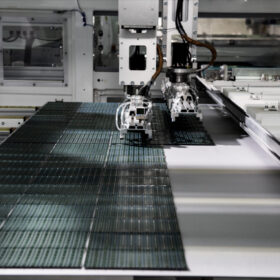
Chinese PV Industry Brief: Aiko, Skyworth PV plan 5 GW back-contact solar module factory in Guangxi
The two companies will invest approximately CNY 2 billion ($282.8 million) in the new facility, which will host two production lines, each with a capacity of 2.5 GW. The project has already passed environmental review.

The Hydrogen Stream: EU endorses 100 cross-border hydrogen projects
The selected projects will be eligible for EU funding from the Connecting Europe Facility and will benefit from streamlined approval and regulatory processes.

Cooling PV modules with seawater
A research team in India developed a passive solar-panel cooling method using a thin, still layer of seawater placed over the module surface. Tests showed that while a thick water layer sharply reduced energy output, a thin 5 mm layer lowered module temperatures and increased daily energy generation by up to 8.86%.
