
Key takeaways from Solar Flex Prague
Czechia’s first international conference on solar and flexibility highlighted that the combination of solar with storage and flexibility sources is key to not just Czechia’s, but also Europe’s, secure and competitive electricity system.

Bulgaria installs 1.4 GW of solar in 2025
Bulgaria installed over 1 GW of solar for the third consecutive year in 2025 and is forecast to add over 2 GW this year thanks to a large pipeline of utility-scale projects.
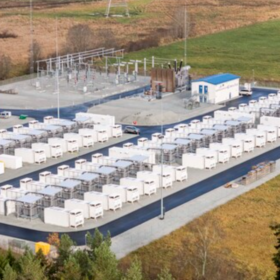
Testing fault at 100 MW battery disrupts Estonia-Finland power link
During testing at Estonia’s 100 MW Kiisa battery park, both EstLink 1 and EstLink 2 tripped, triggering the most severe disturbance to the regional power grid since desynchronization from the Russian electricity system. As a result, nearly 1 GW of capacity was lost within seconds. The park’s owner has since publicly pointed to the battery manufacturer.

Serbia installs 134.3 MW of solar in 2025
Serbia had a record year for solar additions in 2025, led by deployment of large-scale plants. The country has a gigawatt-size project pipeline, although most remain in the earlier stages of development and are not expected to come online this year.

Ukraine deploys 1.5 GW of solar in 2025
The Solar Energy Association of Ukraine estimates around 1.5 GW of solar was added in the country last year, driven by growing interest in projects co-located with battery energy storage systems across market segments.
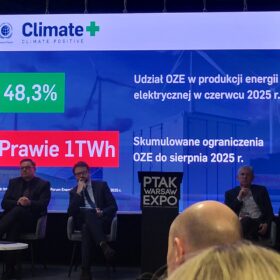
Key takeaways from Solar Energy Expo in Poland
Solar Energy Expo 2026, Poland’s flagship PV-plus-storage trade fair, returned this month with a small show-floor footprint but a sharp focus on flexibility and market reform, as well as the storage, inverter and grid-forming technologies shaping the nation’s next phase of grid integration.
EU opens probe into Bulgaria compensation award to foreign investor
The European Commission has launched an in-depth investigation to assess whether a €61 million ($71.6 million) arbitration award in favor of Malta-based ACF Renewable Energy is compatible with EU State aid rules.

Hungary adds 1.1 GW of solar in 2025
Hungary deployed over 1 GW of solar for the third consecutive year in 2025, driven largely by grid-scale solar additions. There are concerns momentum could slow in the coming years due to no new connection permits for large-scale projects authorized over the last three years.
Poland draft grid law could slow solar and storage investment, warns industry
The Polish Photovoltaic and Energy Storage Association (PSFiME) says proposed changes to Poland’s energy law could impose high upfront costs on developers, raising market entry barriers and unfairly favouring large, well-capitalized players.
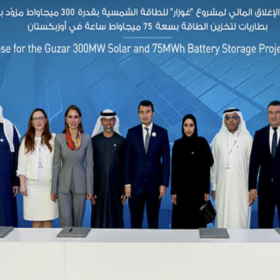
Masdar reaches financial close on 300 MW Uzbek solar project
The Abu Dhabi-based developer has secured $225 million ($193.6 million) for the development of a 300 MW solar plant linked to 75 MWh of energy storage in Uzbekistan, as part of its commitment to deploy 2 GW of renewables in the country.
