French regulator highlights flexible grid connections, battery queue pressures
France’s energy regulator says wider use of flexible grid connections is becoming essential as solar and battery projects compete for limited network capacity, with storage connection queues now totaling 2.8 GW.
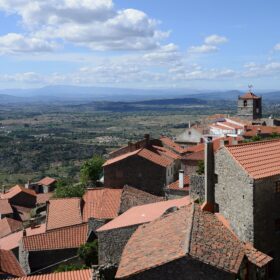
Campaign group protests giant solar projects in Portugal
A campaign group in Portugal is challenging large-scale solar developments in Beira Baixa, Portugal. Developers of a proposed 867 MW solar site told pv magazine sustainability is central to the project, including biodiversity measures and tree planting at a rate 18 times higher than removals.

UK startup claims its electrolytes can triple flow battery energy density
A startup led by Cambridge University scientists and the former chair of Oxford PV is attempting to commercialize flow battery electrolytes with greater energy density than vanadium-based batteries. Kodiaq Technologies claims its electrolytes can be deployed as a drop-in solution for redox flow batteries.

Poland’s massive new airport project to host utility-scale solar-plus-storage project
Poland’s Central Transport Port company tendered 20 MW of solar PV plus 50 MW of battery storage capacity with a working time of two hours. The project’s capacities could be expanded in the future, when the Port Polska airport will be fully operational.

New European solid-state battery business targets commercial production
Axen, Syensqo and IFPEN establish new company to produce high performance sulfide solid electrolytes for solid-state batteries in Europe. New company Argylium will develop its electrolyte portfolio at facilities in France.
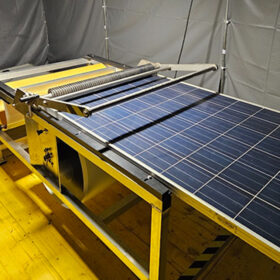
French startup offers on-site solar module repair solution
France-based DOTSun has developed an on-site repair solution for solar panels with degraded backsheets, compatible with PA, PVDF, and PET types. The system uses a compact laminator to apply a protective film to the rear side of the module, reportedly restoring insulation and extending the service life of up to 2,000 panels per site.

Serbia tenders design, feasibility study of solar project
Serbian utility Elektroprivreda Srbije (EPS) is seeking bids for a feasibility study and design of a solar plant on an existing thermal power plant’s ash disposal site, with applications due by Jan. 23.

Semi-transparent photovoltaics cost-competitive only up to 50% transparency
Researchers from Spain found that semi-transparent PV systems are commercially viable only up to about 50% transparency, as higher transparency sharply reduces efficiency and increases system costs. Their analysis shows that declining power density, and not balance-of-system or financing factors, is the main driver of higher LCOE, even in high-irradiation regions.

Germany adds 17.5 GW of solar in 2025
Germany installed about 17.5 GW of new PV capacity in 2025, taking cumulative installations past 117 GW by year end, according to preliminary data from the German Solar Association.
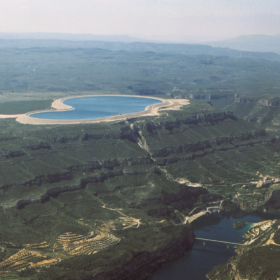
Spain opens €90 million funding round for 7 GWh of pumped hydro storage
Spain will provide €90 million ($105.3 million) in funding for nearly 1 GW of pumped hydro projects, adding 7 GWh of long-duration energy storage (LDES) by 2035. Each project will be eligible for a maximum €50 million grant and all work must be completed by June 30, 2035.
