French commune harnesses local solar power
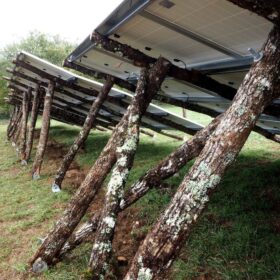
The new 300 kWp power plant in the Haute-Loire commune of Rosières, designed with a mounting system made from local wood, is part of a collective self-consumption operation that sells surplus energy to green supplier Energie d’ici in the local currency, the LIEN.
Carbon unveils first PV panels
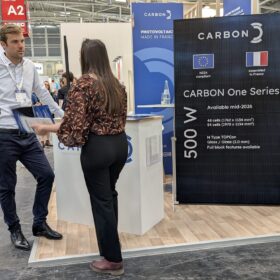
At the Intersolar trade show in Munich, the startup Carbon is showcasing its first PV modules, which will be available from mid-2026 in power ranges from 445 Wp to 505 Wp. A third module, with power outputs from 615 Wp to 625 Wp, will later complete the Carbon One series.

Nowos extends lithium battery repair to include stationary, industrial equipment
Netherlands-based Nowos is expanding its micro-mobility battery repair business to cover a wider range of batteries as demand for its service grow in France, Netherlands, and the United Kingdom. It is now adding new repair hubs in Poland and Germany.

Spain’s nationwide blackout leaves millions in the dark, cause still unclear
Spanish energy expert Antonio Delgado Rigal tells pv magazine that while the exact cause of yesterday’s nationwide blackout in Spain remains unclear, preliminary signs point to grid instability triggered by system failure.
DAS Solar plans 3 GW solar module factory in France
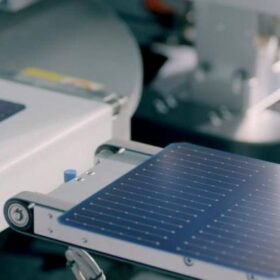
Chinese manufacturer Das Solar says it will open its first European PV panel assembly plant in Mandeure, eastern France, by the end of 2025.

The Hydrogen Stream: Scandinavia, Italy may produce grid hydrogen by 2030
Aurora Energy Research says the global electrolyzer pipeline now totals around 1.3 TW, with 114 GW in development and 32% expected online by the end of 2026. The firm cites stronger EU policy support and growing momentum in hybrid power purchase agreements (PPAs).

New web tool helps find best tilt angle for south-facing bifacial PV plants
An international research team has created a new model that finds the best tilt angle for south-facing bifacial PV plants across Europe. The scientists also considered the Alpine region to examine the impact of mountains on optimal tilt angles.

France deploys 1.4 GW of solar in Q1
France installed 1.4 GW of solar in the first quarter of 2025, bringing its cumulative PV capacity to 23.5 GW by the end of March.

The Hydrogen Stream: EU backs €400 million H2 scheme in Spain
The European Commission has cleared a €400 million ($455.2 million) Spanish aid program to scale renewable hydrogen output, backing up to 345 MW of electrolyzer capacity and targeting 221,000 tons of production via the EU Hydrogen Bank’s 2025 auction round.
CEA-INES unveils PV module interconnection tech that reduces silver use by 26%
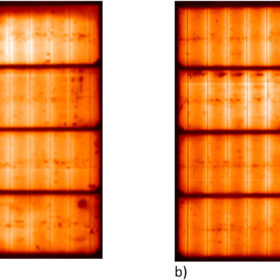
The French research institute found that switching from silver cell metallization to silver-copper metallization can lower the total silver quantity in a heterojunction module, with a total silver amount of only 14 mgAg/W being required. Their interconnection technique is based on low silver content electrically conductive adhesives and copper ribbons.
