
The Hydrogen Stream: Ionautics advances catalyst toward production
Sweden’s Ionautics has advanced its platinum-based hydrogen catalyst toward full-scale industrial production, while thyssenkrupp nucera has signed contracts for 300 MW of alkaline electrolysis capacity in Spain and 260 MW in India.
The case for ground-level agrivoltaics
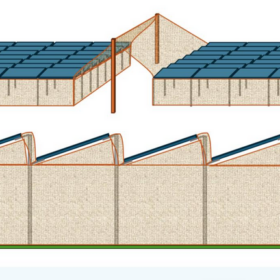
German engineering firm BEC Energie Consult has developed a substructure for low-mounted agrivoltaics designed to provide cost-efficient installation while supporting crop growth and livestock management, with the potential to enhance economic viability.
Iran conflict stirs solar demand debate in Germany
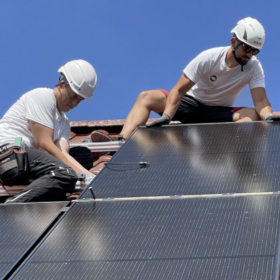
Germany’s solar sector is reporting a surge in inquiries following the military escalation between Israel, the United States, and Iran, with E.ON citing a doubling of demand for solar installations. Other industry participants are more cautious, attributing much of the increase to seasonal patterns rather than geopolitical anxiety.
Survey reveals PV systems in Germany outperform lifespan expectations
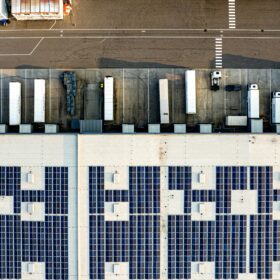
Researchers analyzed 16 years of data from over 1 million PV systems in Germany and found annual degradation is just 0.52–0.61%, roughly half prior estimates. Environmental factors like heat, frost, and air pollution affect performance, while smaller systems degrade less than larger ones, boosting long-term reliability and profitability.
How EU NIS2 is reshaping physical and cybersecurity for PV plant operators
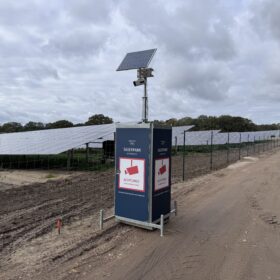
The European Union’s NIS2 Directive is pushing PV operators to strengthen both cyber and physical security, treating solar assets as critical infrastructure. It also highlights the need for stronger physical protection measures, such as site surveillance, access control, and perimeter security to prevent tampering and intrusion.
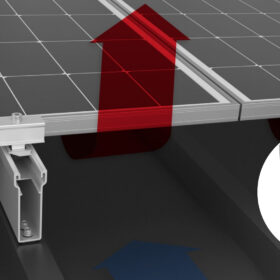
K2 Systems unveils elevated PV mounting solution for metal roofs
The K2 MultiRail High mounting system is a one-piece elevated solution with a height of 100 mm tailored to improve rear ventilation on metal roofs. K2 Systems says greater distance between modules and metal roof surface improves airflow and lowers module temperature, which can translate to higher annual energy yield.

Atmoce launches backup box for three-phase emergency power retrofit
Atmoce has launched a backup box in Germany that adds three-phase emergency power to existing PV systems and works with the company’s M-ELV battery.
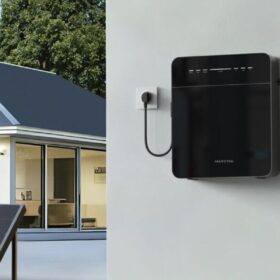
Marstek launches 2 kWh plug-in battery storage system
Marstek has unveiled a plug-in storage system with a two-kilowatt-hour capacity. The device plugs into a standard household socket and is designed to store solar power from balcony systems or draw in cheap electricity from dynamic pricing tariffs.
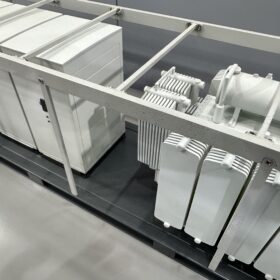
The Hydrogen Stream: Atome secures $420 million debt for Paraguay plant
Atome says it has secured a $420 million debt package for a $650 million low-carbon fertilizer project in Paraguay producing 260,000 metric tons (MT) per year, while Asahi Kasei says it has begun installing a 1 MW-class electrolyzer at Finland’s first commercial hydrogen refueling station.
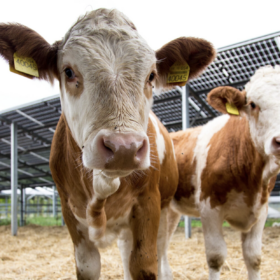
Research shows conventional solar arrays can support livestock grazing
Conventional solar parks can support sheep and cattle grazing because vegetation under and between PV modules provides adequate feed quality, according to a new research report that analyzes five installations in Germany.
