
Pahal Solar expands module manufacturing capacity to 3 GW
Indian manufacturer Pahal Solar has secured inclusion on India’s Approved List of Models and Manufacturers (ALMM) and Bureau of Indian Standards (BIS) 2023 certification for expanded module capacity and has started building a new solar cell and aluminium frame manufacturing complex.

India wraps up 1.2 GW renewables-plus-storage tender at $0.069/kWh
Solar Energy Corp. of India (SECI) has awarded 1.2 GW of renewables-plus-storage capacity, covering 4.8 GWh of daily peak supply, at a lowest tariff of INR 6.27 ($0.069)/kWh.

India’s GREW Solar secures 550 MW repeat module order from IPP
Indian module manufacturer GREW Solar has won a 550 MW repeat supply order from an independent power producer (IPP), with deliveries of tunnel oxide passivated contact (TOPCon) modules scheduled to be completed by March 31, 2026.
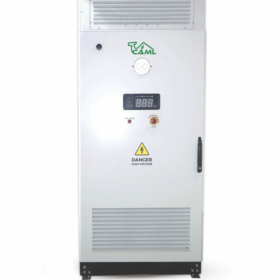
India’s Loom Solar unveils 261 kWh BESS for C&I applications
Indian solar manufacturer Loom Solar has launched a 125 kW/261 kWh CAML battery energy storage system (BESS) for commercial and industrial (C&I) applications. The BESS is scalable up to 1 MWh.
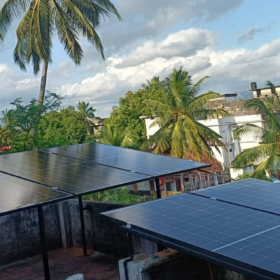
India installs more than 2.08 million rooftop solar systems under PM scheme
India has installed more than 2.08 million rooftop solar systems under the PM Surya Ghar: Muft Bijli Yojana program since early 2024, with INR 147.7 billion ($1.6 billion) disbursed in central subsidies, according to the Ministry of New and Renewable Energy (MNRE).

U.S.-India trade deal reduces solar tariffs
Tariff reductions under the new U.S.-India trade agreement lower import costs for solar modules and energy storage components. Reciprocal tariffs were effectively reduced from 50% to 18%.

India renewables seek policy clarity, storage incentives in Union Budget 2026
India’s renewable energy industry is urging the government to use Union Budget 2026 to unlock stalled projects, lower financing costs, and accelerate domestic manufacturing across solar, storage, and grid infrastructure.

The Hydrogen Stream: Repsol, Sunfire advance 200 MW of green H2 in Spain
Repsol and Sunfire are advancing 200 MW of renewable hydrogen projects in Spain, while new collaborations and funding across Europe and India aim to accelerate electrolyzer development and hydrogen infrastructure.

Stäubli invests $10 million to expand PV connector manufacturing in India
Swiss connector manufacturer Stäubli invested $10 million to expand its manufacturing facility in Bengaluru to increase production of PV connectors for domestic and global solar markets.
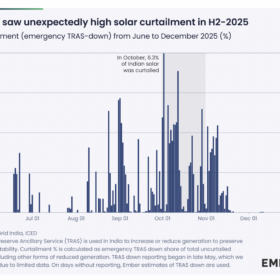
India curtails 2.3 TWh of solar between May and December 2025
A report by energy think tank Ember finds India’s system operator regularly had to curtail solar generation as an emergency measure to maintain grid security, as other resources were already flexing to their maximum capabilities.
