
New electrolyte tech enables stable operation of high-voltage sodium-ion batteries
U.S. researchers developed a meta-weakly solvating electrolyte that optimizes sodium-ion solvation structure, enabling faster ion transport, reduced side reactions, and improved interfacial stability in high-voltage sodium-ion batteries. This design significantly extends cycle life and outperforms conventional and localized high-concentration electrolytes by promoting more uniform and stable electrode–electrolyte interfaces.
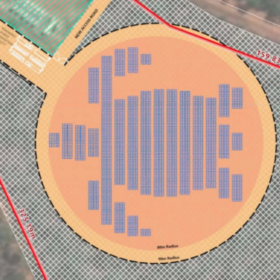
Remote Australian community secures permit for Sun Turtle solar and battery project
A remote Western Australia First Nations community with its sights set on reducing diesel dependence and energy insecurity has had a solar and 3.25 MW battery energy storage project approved for development.
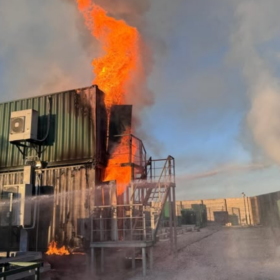
Short circuit in nickel manganese cobalt batteries causes fire at UK BESS project
Project owner told ESS News that fire at one of the UK’s oldest grid-scale BESS projects was caused by fault with nickel manganese cobalt (NMC) technology used in some early UK BESS projects. The fire occurred days before scheduled augmentation to upgrade Rufford Colliery BESS site.

EU funding ban on high-risk inverters, including Chinese suppliers, extends to BESS
The new policy has already applied, and impacts billions in funding from the European Investment Bank on renewable projects including standalone and co-located storage.

Batteries: The game has changed – and it’s not what you think
A single benchmark no longer exists. In some cases, charging speed is what matters; in others, it is energy density, and in still others, cost and scalability. In other words, the battery is ceasing to be a simple component. It is becoming the transversal energy infrastructure of the next industrial cycle. And those who can control not only the technology but also production, integration, and the grid will have an advantage that will be difficult to recover.
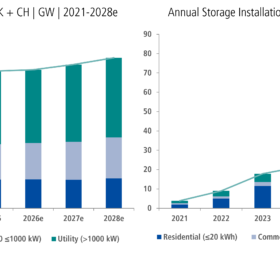
Europe’s solar and storage development: Selectivity amid rising global supply and returning energy shocks
Escalating Middle East tensions and global energy supply risks are accelerating Europe’s shift toward solar and storage, particularly in commercial, industrial, and utility-scale segments where energy security, resilience, and price stability are becoming central investment drivers. At the same time, expanding manufacturing capacity in China and India is redirecting surplus solar and storage supply toward Europe, creating a highly competitive and increasingly selective market where long-term success depends on quality, reliability, ESG alignment, and strategic market positioning.

ESS Tech to add 8.5 GWh of US-made sodium‑ion batteries to its portfolio
ESS Tech is complementing its iron flow storage offering, which is engeeneered for the 8–24 hour long-duration segment, with sodium-ion battery products aimed at short and medium-duration applications.

Anker Solix launches 7 kWh modular battery with 5 kW bidirectional inverter
The system features AI-driven energy management, 10,000-cycle battery life, and scalable expansion up to 126 kWh.

Gotion unveils 5 MW/18.8 MWh ensclosed battery storage system
While the exact specifications of the new product, such as dimensions and weight, haven’t been disclosed, available imagery suggests potential transportation challenges.

Chile reaches 4.6 GW of energy storage under construction
The March 2026 Energy Sector Construction and Investment Projects Report, released by the Chilean Ministry of Energy, records 38 storage systems under construction, for 4,597 MW and 18,780 MWh.
