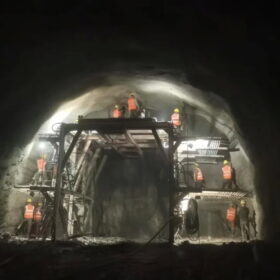
Chinese consortium building 1.2 GWh compressed air energy storage project
A state-backed consortium is constructing China’s first large-scale compressed air energy storage (CAES) project using a fully artificial underground cavern, marking a major step in the technology’s commercialization.
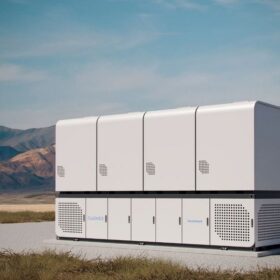
Fluence launches highly-modular 7.5 MWh AC-based BESS platform
The system features an innovative split design breaking away from the industry standard 20-foot container. It is configurable for storage durations of two to eight hours.
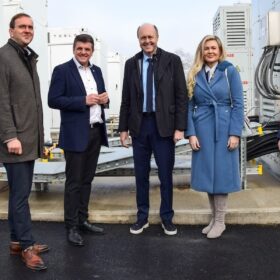
Austria’s largest battery goes online
The storage facility featuring six Megapack 2XL systems from Tesla was built over a seven-month period in the vicinity of a wood gas generator and a solar farm. The project has a power output of 12 MW and storage capacity of 24 MWh.
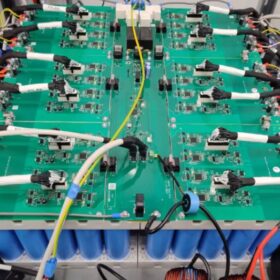
HTW Berlin 2025 energy storage inspection: Kostal, SAX Power set new efficiency records
The evaluation confirmed the outstanding system efficiency of European inverter manufacturers, in particular. It also found large differences in efficiency of certain hybrid inverters from the maximum efficiency specifications provided by the manufacturers on the data sheets.
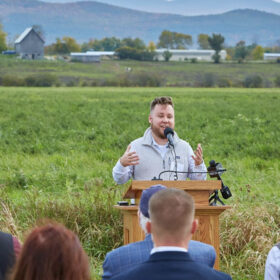
Higher voltage faces greater resistance
Utility-scale solar is set to crank up the voltage, preparing to shift from 1.5 kV to 2 kV on the DC side. It is a move that could redefine PV system design and slash costs, but it won’t happen globally due to vastly different regulations as voltages rise, reports Tristan Rayner.
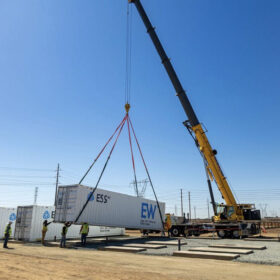
Go with the flow (batteries)
There is a gap in the market for long-duration energy storage (LDES), according to US-based manufacturer ESS Inc. – one which can’t be plugged with lithium-ion chemistry. Hugh McDermott, of ESS Inc. tells pv magazine how he thinks iron flow batteries fit into the energy system of the future, as the company pursues global expansion.
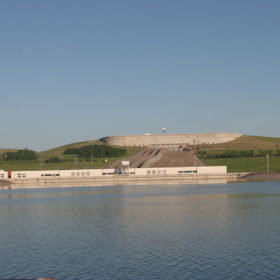
Philippines’ green energy auction heavily oversubscribed with nearly 7 GW of pumped hydro bids
The country’s Green Energy Auction (GEA-3) attracted a cumulative 7.5 GW of projects, far surpassing the 4.65 GW installation target.
Waaree breaks ground on alkaline electrolyzer factory
Waaree Group has started building an alkaline electrolyzer factory in India. The facility will commence operations with 300 MW of production capacity.
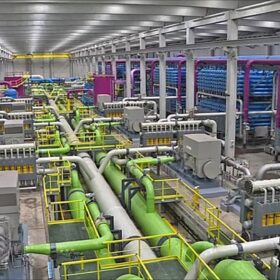
Powering seawater desalination plants with photovoltaics
A German research team has investigated the feasibility of a large-scale PV-powered seawater reverse osmosis desalination plant in Jordan and has found that keeping the concentrate flow constant is the most appropriate desalination operating mode.
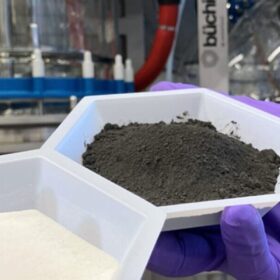
German project for fast industrial implementation of sodium-ion battery technology
Cheap, safe, widely available sodium could be used for battery energy storage alongside photovoltaics. The Sodium-Ion-Battery Germany (SIB:DE) Research project is investigating whether sodium-ion technology can be affordably integrated into lithium-ion battery production facilities.
