
Who are the solar and wind champions?
In a new monthly column for pv magazine, the International Solar Energy Society (ISES) reveals that Sweden, Australia, Netherlands, Germany and Denmark are the leading countries for per capita solar and wind generation capacity. Furthermore, it explains that global solar capacity has been doubling every 3 years, and wind every 6 years, whereas fossil and nuclear capacity and generation have been almost static in recent years.

New research sheds light on intrinsic limitations of selenium solar cells
Danish researchers have analyzed fundamental material properties of selenium solar cells and have found their potential is higher than generally believed. They used carrier-resolved photo-Hall analysis to address discrepancies and reproduce experimental current-voltage and external quantum efficiency measurements.
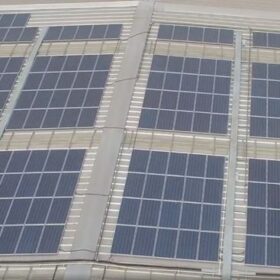
India set to hit 30 GW of rooftop PV capacity in fiscal 2027
India’s installed rooftop solar capacity will reach 25 GW to 30 GW by fiscal 2027 from 17 GW in fiscal 2025, according to CareEdge Advisory & Research.

Sungrow launches fully integrated C&I battery
With a fully integrated power conversion system (PCS), battery management system (BMS), and energy management system (EMS), PowerStack 255CS aims to streamline energy storage operations while reducing installation complexity.
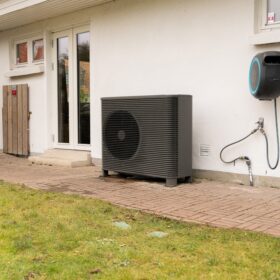
California introduces bill to accelerate heat pump adoption
With California projected to fall two million installations short of its 2030 target, the bill aims to make installing heat pumps and HVAC systems faster and easier.
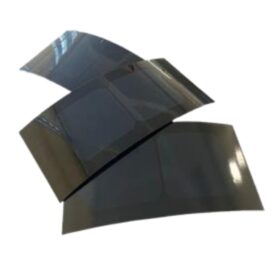
Izpitek unveils products to transform inert surfaces into PV systems
Izpitek is launching a new product line using patented tech to embed PV cells in composites, cutting weight by up to 95%.

Longi claims world’s highest efficiency for silicon solar cells
Longi said it has achieved a 27.81% efficiency rating for a hybrid interdigitated back contact, as confirmed by Germany’s Institute for Solar Energy Research Hamelin (ISFH).

Glint Solar unveils software for early-stage BESS projects
The Norwegian PV planning software company has released a new product for prospecting, analysis, and design of battery energy storage system (BESS) projects at the early stage.

Agrivoltaics for kiwis
Volta Group and Richel Group have commissioned a photovoltaic greenhouse in France for kiwi cultivation.
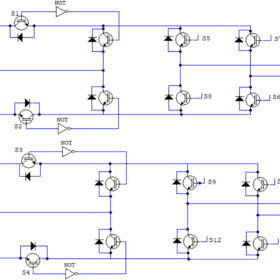
Asymmetrical 49-level cascaded inverter for PV applications
Researchers in Iraq have designed a multi-level cascaded inverter that can purportedly produce high-quality sinusoidal output voltage and current waveforms, while reduing harmonic distortion. It uses the so-called phase disposition level-shifted pulse width modulation (PDLSPWM) control technique to operate the switches in the circuit “effectively.”
