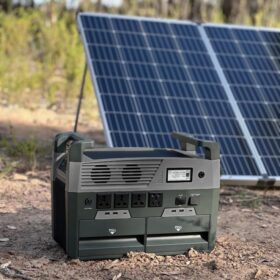
Australian startup launches 6 kW / 7.2 kWh mobile solar generator
Decarbon Venture has launched what it claims to be the world’s first “swappable” solar generator at half the weight and double the power rating of other products on the market.
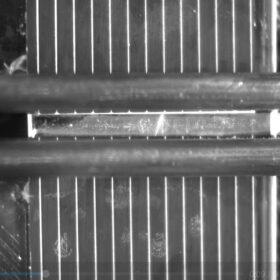
Novel non-contact soldering technique for ribbon tabbing in solar cell manufacturing
Finnish scientists have tested a new eddy current-based soldering method for ribbon tabbing in solar cells and have found it considerably reduces the number of cracks and damages caused by thermal-mechanical stress in the process. They claim the new technique may already compete with conventional soldering methods in commercial production.

Austria hits 1 GW of annual solar installations
PV Austria says that 1,009 MW of PV systems were installed in Austria last year, enabling solar to meet approximately 6.6% of total electricity demand.
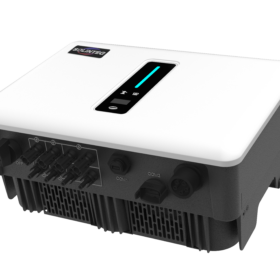
Solinteg unveils new inverter series for rooftop PV
Solinteg is offering nine versions of its new on-grid inverters, with nominal power ranging from 4 kW to 25 kW, an efficiency rating of up to 98.8%, and a European efficiency of up to 98.2%
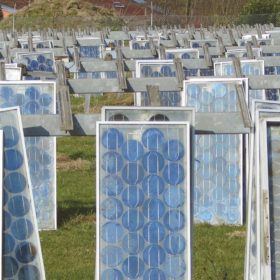
Solar passports to support PV waste management in India
A new study proposes blockchain-based solar passports to address the PV waste management challenge in India. It says such a framework would enable transparent tracking and verification of PV panels throughout their life cycle.
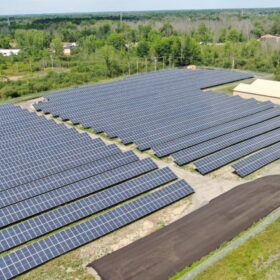
US researchers identify rising number of solar siting restrictions
Columbia University researchers have identified 59 new renewable energy siting restrictions across 35 US states, taking the total to 228. They noted that nine state-level restrictions are severe enough to block projects.
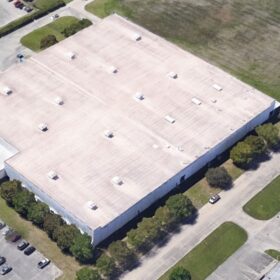
SEG Solar leases land for 5 GW cell, 3 GW module production in Indonesia
SEG Solar (SEG), a Texas-based module manufacturer, will lease land in Indonesia for 5 GW of solar cell and 3 GW of PV module capacity.
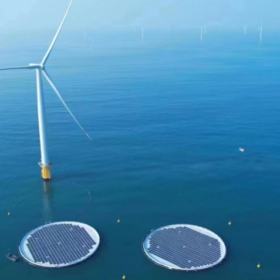
Offshore floating vs. land-based PV systems
A group of researchers from Utrecht University analyzed offshore floating photovoltaic (OFPV) systems to determine reasons for enhanced performance compared with land-based systems. Out of their research, the team developed two regression models to help predict yield advantages when siting projects.
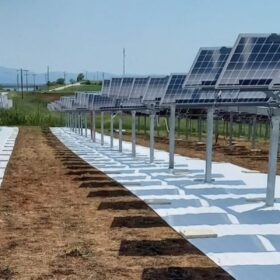
Developer using membranes to increase bifacial solar module yield by 6.4%
Germany-based Solar Kapital has used membranes at three of its PV plants in Greece. It claims that the payback time of the new solution is relatively short.
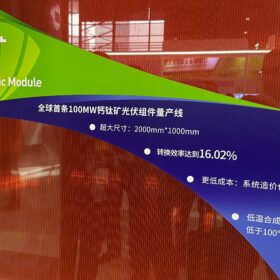
GCL-SI unveils perovskite solar panel with 16.02% efficiency
GCL-SI has launched a new 320 W perovskite solar module. The company guarantees that the 10-year end power output will be at least 90% of the nominal output power, which decreases to 80% after 25 years.
