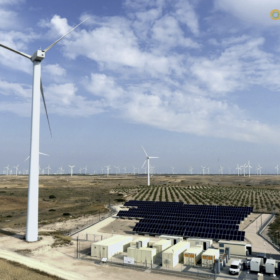
Functional requirements for grid-forming inverters
As the grid evolves toward a future dominated by inverters, manufacturers are developing and refining necessary stability functions.
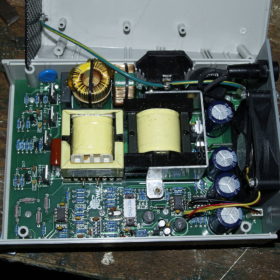
Impact of solar module soiling on grid-forming inverters
New research from Serbia claims air-polluted urban climatic conditions may not only induce maximum power point (MPP) tracking problems in PV systems but also reduce power yield by up to 30%. The scientists also said that soiling may significantly affect the functionality of single-stage inverters operating in grid-forming mode.
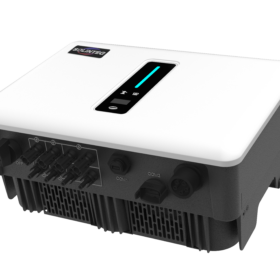
Solinteg unveils new inverter series for rooftop PV
Solinteg is offering nine versions of its new on-grid inverters, with nominal power ranging from 4 kW to 25 kW, an efficiency rating of up to 98.8%, and a European efficiency of up to 98.2%
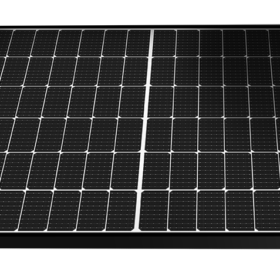
Chinese PV Industry Brief: Huasun secures 2 GW PV order
Huasun has secured an order for 2 GW of solar panels from Power China, while Deye said it is seeking to raise CNY3.5 billion to expand its inverter production capacity.

German regulator warns of defective inverters in balcony PV systems
The German Federal Network Agency (Bundesnetzagentur) has identified issues with certain inverters that lack CE markings, instructions in German, or German retailer addresses. The defects render them ineligible for distribution or use in the country.

Dutch regulator warns of EMC issues, hacking risks for solar inverters
Most solar inverters in the Netherlands fail electromagnetic compatibility (EMC) requirements, posing interference risks and raising the threat of hacking, says the National Inspectorate for Digital Infrastructure (RDI).
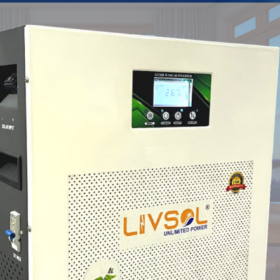
India’s Livsol unveils wall-mounted battery inverter
India’s Livsol has released 300 VA, 1 kVA, 2 kVA, 3 kVA, and 5 kVA versions of its new wall-mounted lithium battery inverters, with operating voltages of 12.8 V, 12.8 V, 25.6 V, 51.2 V, and 48 V.
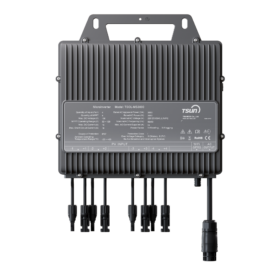
TSUN unveils new series of microinverters
TSUN’s new microinverter series has an input current of up to 18.5 A and an efficiency rating of up to 97.2%. The manufacturer claims it is particularly suitable for complex installation environments.
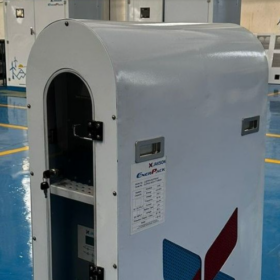
Jakson unveils lithium battery inverter for residential applications
India’s Jakson says its new lithium battery inverter offering consists of a 3 kW battery energy storage system with a 3 kW hybrid inverter and a 4.8 kWh, 48V lithium-ion battery module. It can be expanded to megawatt scale, depending on power backup requirements.

Clementy Group terminates €95 million proposal to invest in Fimer
Clementy Group – a UK-based investment firm – has decided to scrap its plans to invest €95 million ($104.5 million) in Fimer, as the Italian inverter maker’s shareholders have reportedly failed to issue shares that were needed for the investment. Fimer originally filed for creditor protection in February 2022.
